
SEBA Class 9 Maths Chapter 11 Heron’s Formula Solutions English Medium As Per New Syllabus. to each chapter is provided in the list so that you can easily browse through different chapters SEBA Class 9 Maths Chapter 11 Heron’s Formula Notes and select need one. SEBA Class 9 Maths Chapter 11 Heron’s Formula Question Answers Download PDF. SEBA Class 9 General Maths Solutions.
SEBA Class 9 Maths Chapter 11 Heron’s Formula
Also, you can read the SCERT book online in these sections Solutions by Expert Teachers as per State Council of Educational Research and Training (SCERT) Book guidelines. SEBA Class 9 Maths Chapter 11 Heron’s Formula are part of All Subject Solutions. Here we have given SEBA Solutions For Class 9 Maths for All Chapters, You can practice these here.
Heron’s Formula
Chapter: 11
| Exercise 11.1 |
Q.1. A traffic signal board, indicating ‘SCHOOL AHEAD’, is an equilateral triangle with side ‘a’. Find the area of the signal board, using Heron’s Formula. If its perimeter is 180 cm, what will be the area of the signal board?
Ans: ‘a’ = a
‘b’ =a
‘c’ = a

∴ Area of the signal board


Perimeter = 180 cm

∴ Area of the signal board

Alternatively,
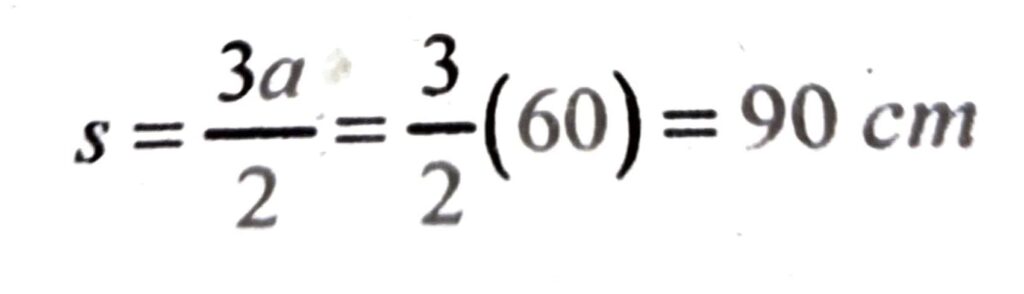
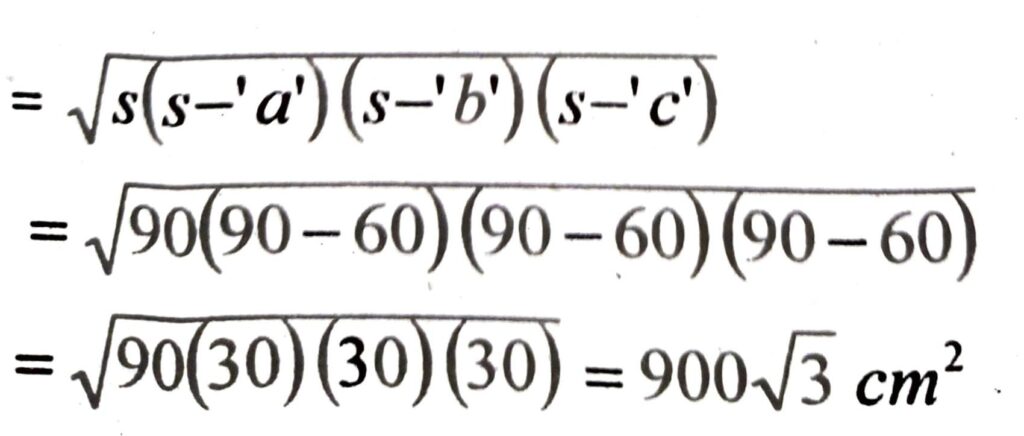
Area of the signal board
Q.2. The triangular side walls of a flyover have been used for advertisement. The sides of the walls are 1200 m, 22m and 120 m (see figure). The advertisements yield an earning of Rs. 5000 per m ^ 2 per year. A company hired one of its walls for 3 months. How much rent did it pay?
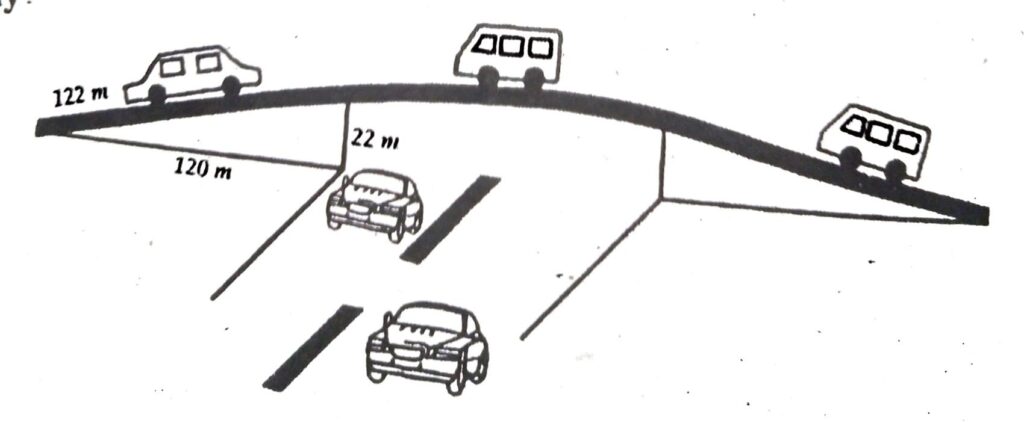
Ans: a = 122m
b = 22m
c = 120m
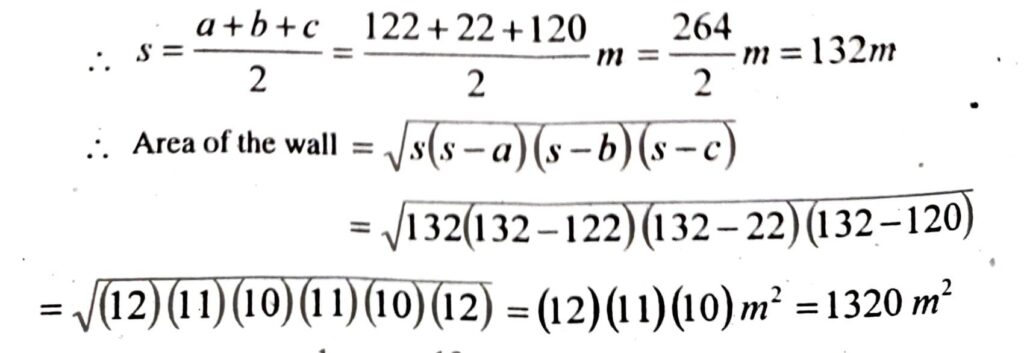
1 year = 12 months
∵ Rent for 12 months per m²= Rs. 5000

∴ Rent for 3 months of 1320 m²= Rs(1250x 1320) =Rs.1650000.
Q.3. There is a slide in a park. One of its side walls has been painted in some colour with a message “KEEP THE PARK GREEN AND CLEAN”. If the sides of the wall are 15 m, 11 m and 6, find the area painted in colour.
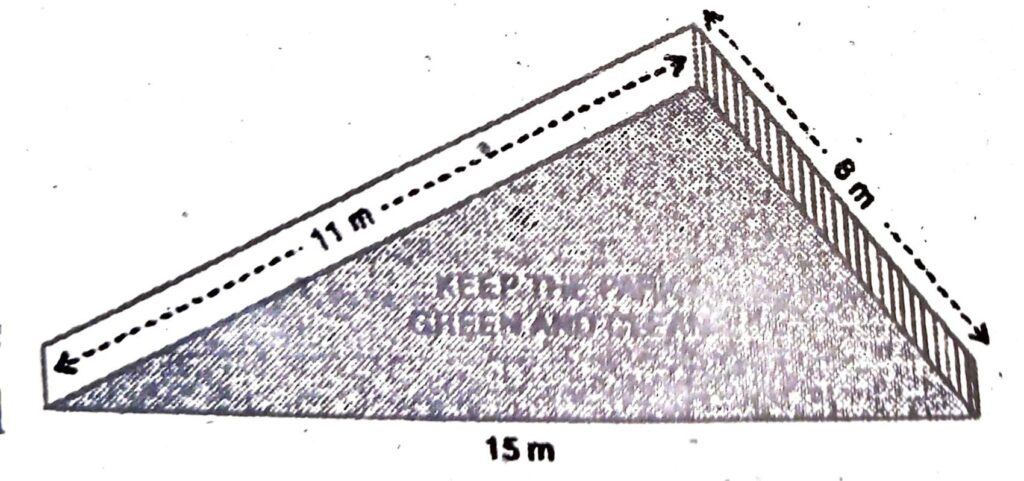
Ans: a = 15
b = 11 m
c = 6 m

∴ Area painted in colour
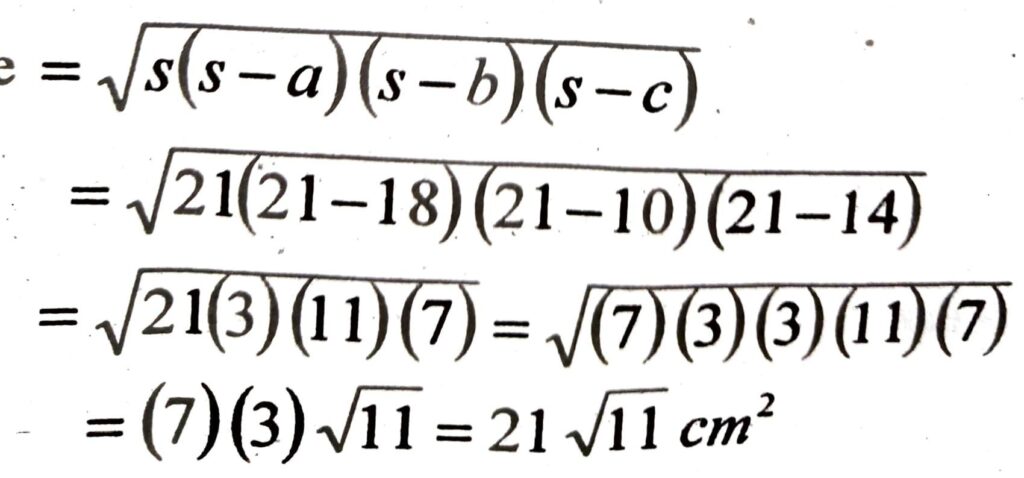
Q.4. Find the area of a triangle two sides of which are 18 cm and 10 cm and the perimeter is 42 cm.
Ans: a = 18cm
b = 10 cm
Perimeter = 42 cm
⇒ a + b + c = 42 ⇒ 18 + 10 + c = 42
⇒ 28 + c = 42 ⇒ c = 42 – 28
c = 14 cm
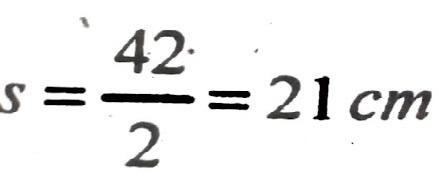
∴ Area of the triangle
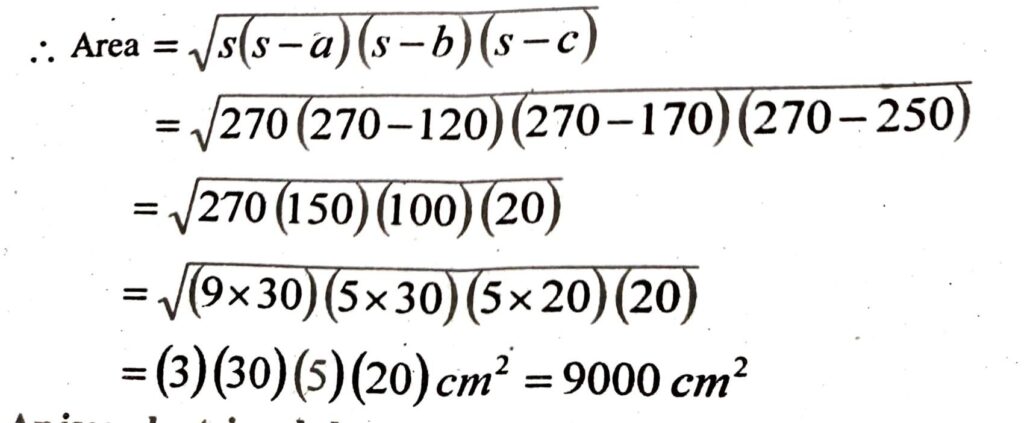
Q.5. Sides of a triangle are in the ratio of 12:17:25 and its perimeter is 540 cm. Find its area.
Ans: Let the sides of the triangle be 12k, 17k cm. Then,
Perimeter = 12k + 17k + 25k = 54k
According to the question,
54k = 540

∴ a = 12k = 12 x 10 = 120 cm
b = 17k = 17 x 10 = 170 cm
c = 25k = 25 x 10 = 250 cm

Q.6. An isosceles triangle has a perimeter 30 cm and each of the equal sides is 12 cm. Find the area of the triangle.
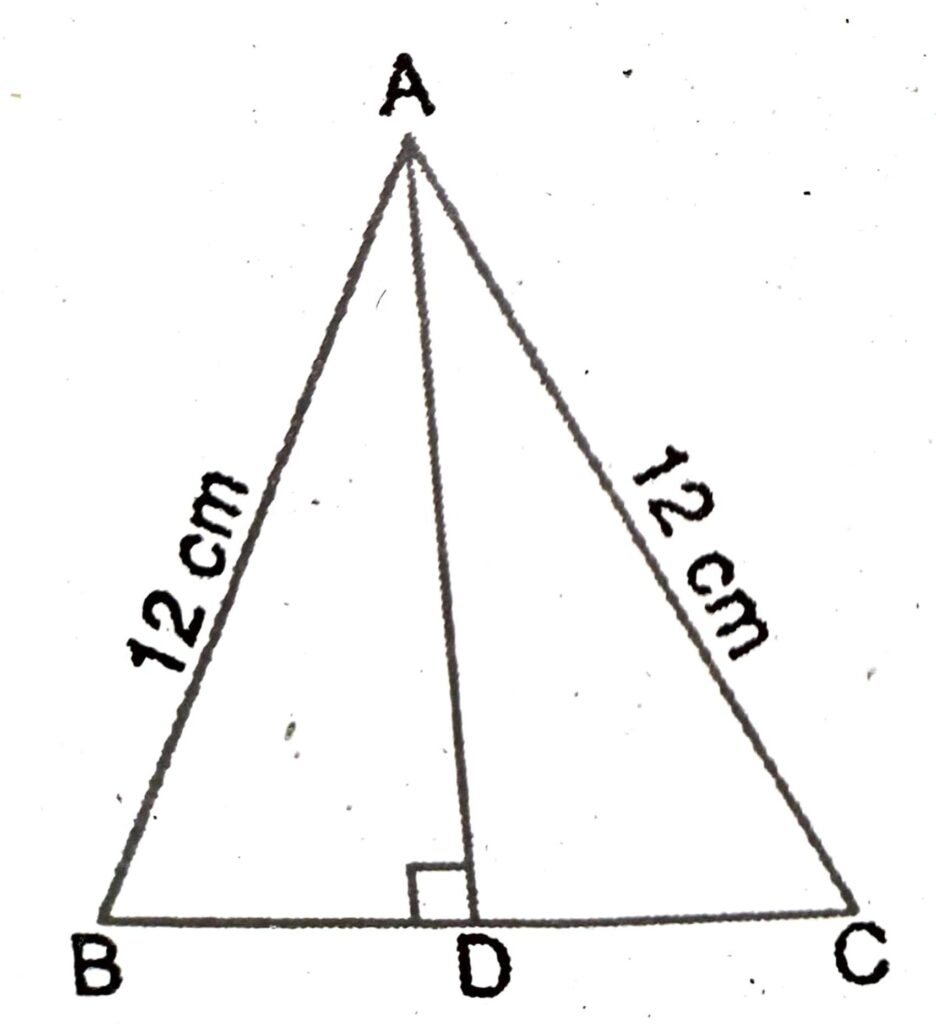
Ans: a = 12 cm
b = 12 cm
Perimeter = 30 cm
⇒ a+b+c=30 ⇒ 12 + 12 + c = 30
⇒ 24+c=30 ⇒ c = 30 – 24
⇒ c = 6 cm
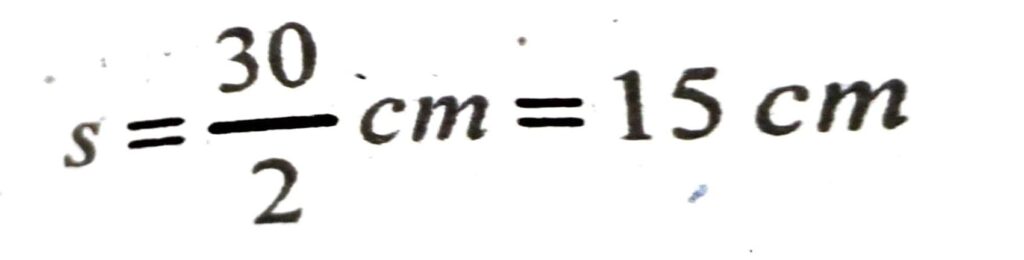
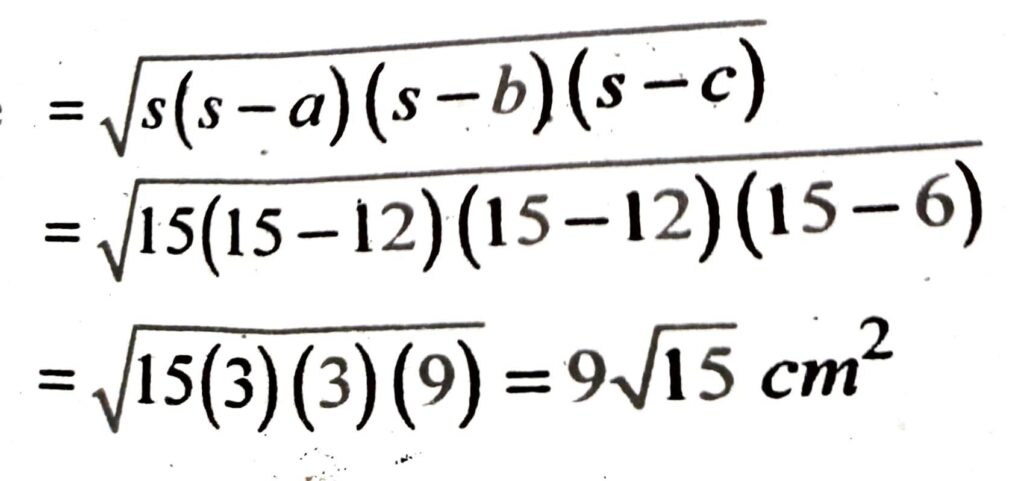
∴ Area of the triangle
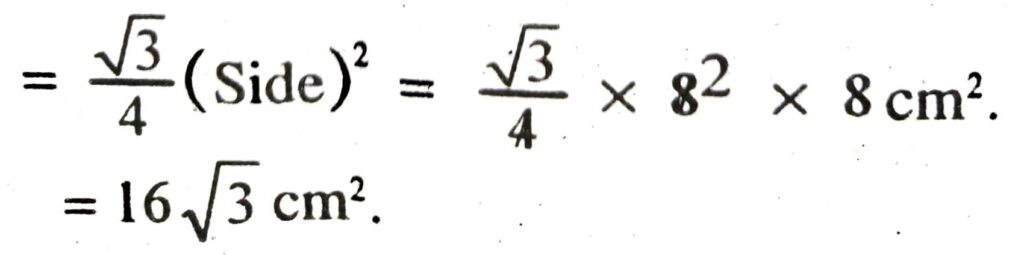
Q.7. Find the area of an equilateral triangle whose perimeter is 24 cm.
Ans: Perimeter of equilateral triangle 24 cm
∴ Each side of triangle
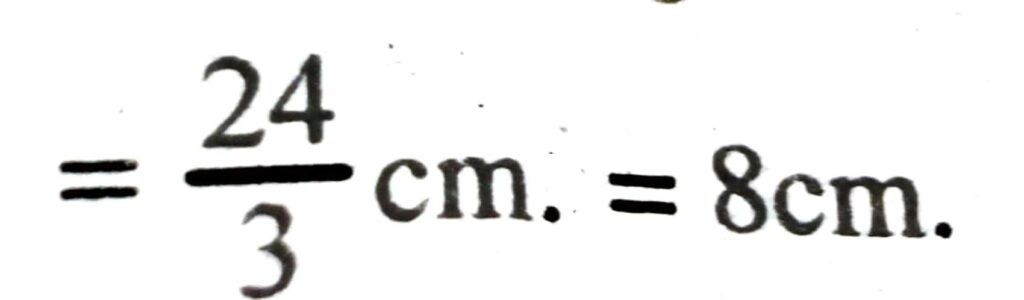
∴ Area of triangle
Q.8. The length of hypotenuse of a right angled triangle is 13 and the length of another side is 5cm. Find its area.
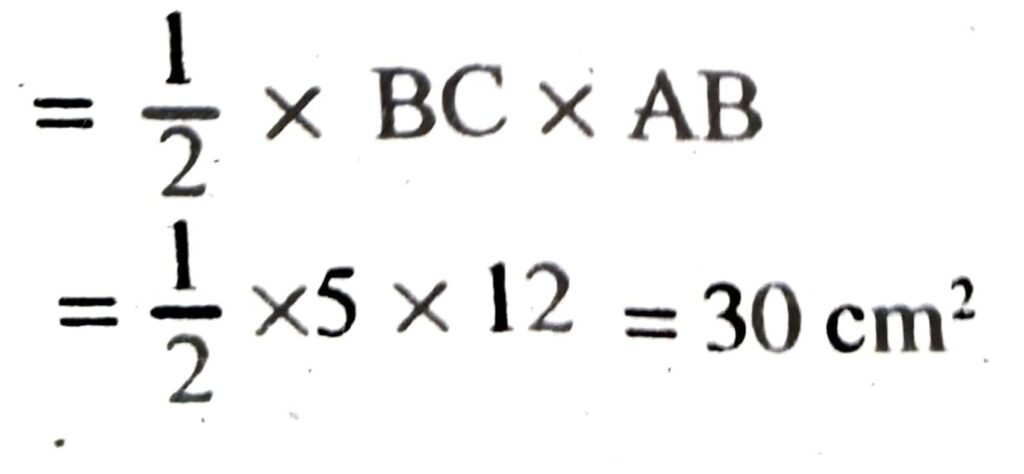
Ans: Let, ABC is a right angle triangle. ∠B = 90⁰, then BC = 5cm,
AC = 13cm.
∴ AB² = AC² – BC = 13² – 5² = 169 – 25 = 144
∴ AB = √144 = 12 cm
So, area of the triangle
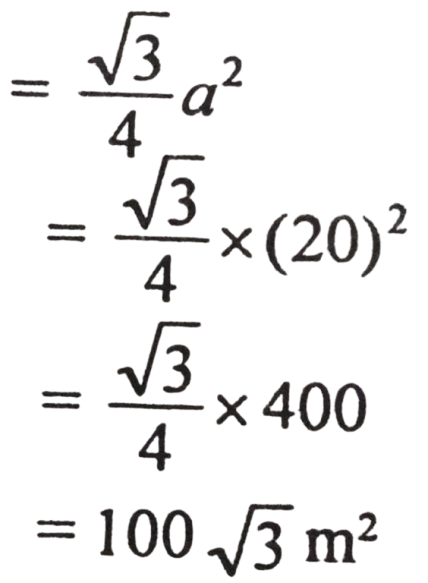
9. The perimeter of an equilateral triangle is 60m. Its area is
(a) 10 √3 m2
(b) 15 √3 m2
(c) 20 √3 m2
(d) 100 √3 m2
Ans: A/Q
a + a + a = 60
⇒ 3a = 60
⇒ a = 20
Area of an equilateral triangle
The correct option is (d).
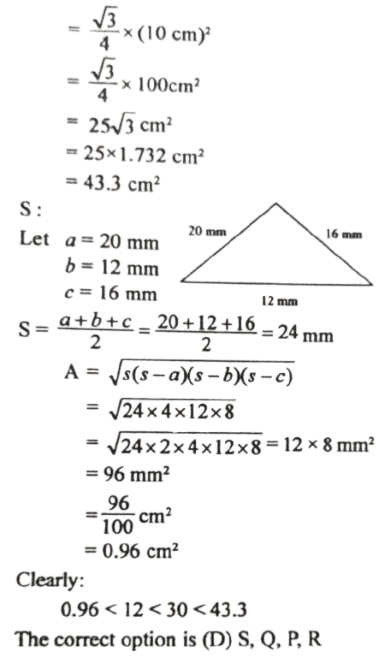
10. Consider the statements P to S,
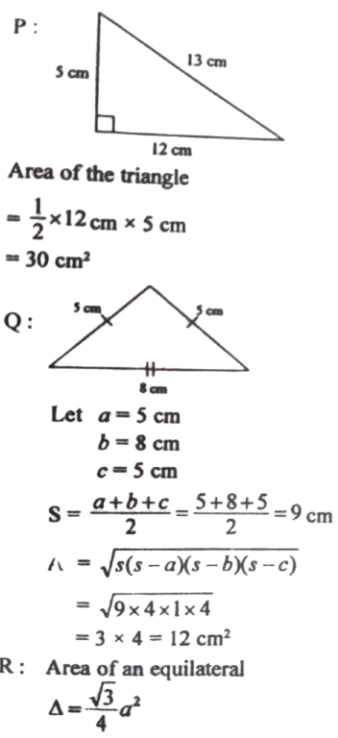
(P) Area of the right triangle whose sides are 5cm, 12cm and 13cm
(Q) Area of the isosceles triangle with equal sides 5cm each and the third side is 8cm.
(R) Area of the equilateral triangle with side 10cm
(S) Area of the triangle with sides 20 mm, 12 mm and 16 mm.
Choose the option that represents the areas of the triangles in increasing sequence.
| (a) | P | S | Q | R |
| (b) | R | P | S | Q |
| (c) | Q | R | P | S |
| (d) | S | Q | R | P |
Ans:
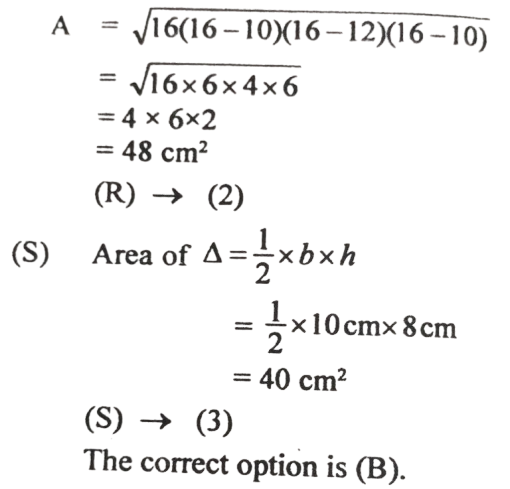
11. Match the columns.
| Column – I | Column – II |
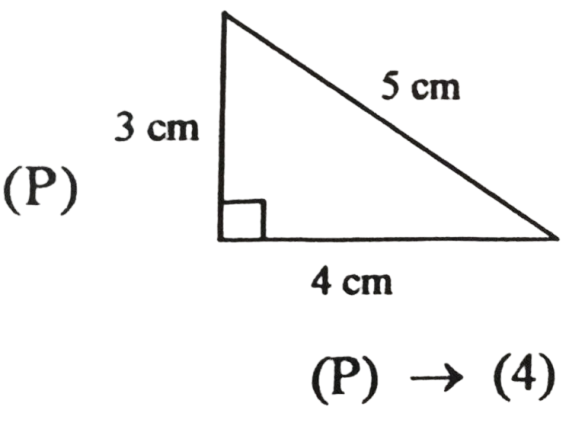
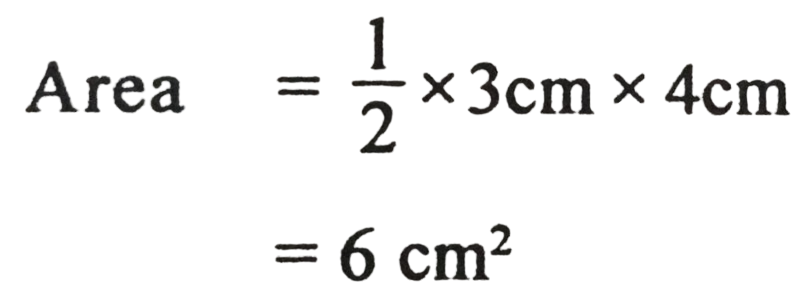
| (P) If the sides of a right triangle are 3cm, 4cm and 5cm, then the area is | (1) 4√3 sq. cm |
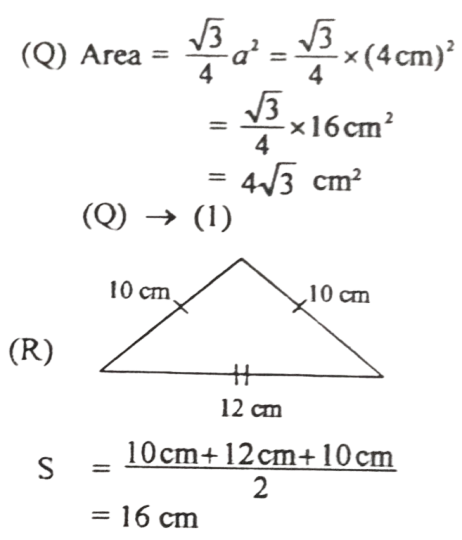
| (Q) If the sides of an equilateral triangle is 4cm, then its area is | (2) 48 sq. cm |
| (R) If two equal sides of an isosceles triangle are 10cm each and unequal side is 12 cm then its area is | (3) 40 sq. cm |
| (S) If the base and height of a triangle are 10 cm and 8cm respectively, then ita area is | (4) 6 sq. cm |
Ans:
12. Which of the following are correct?
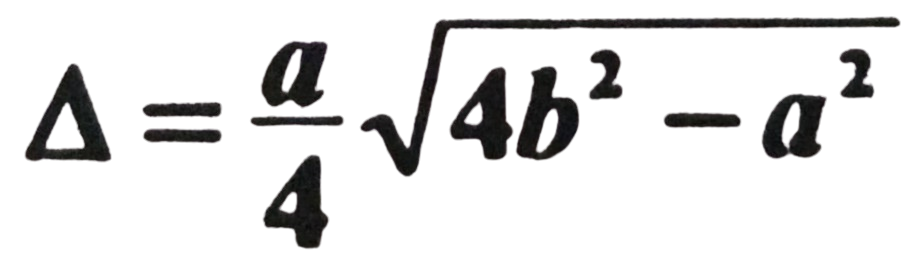
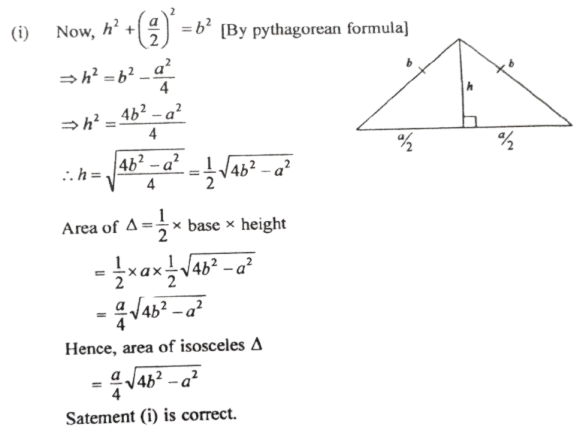
(i) The area ∆ of an isosceles triangle with base ‘a’ and each equal side ‘b’ is given by
(ii) The area of ∆ of triangle with semi perimeter s and sides a, b and c given by

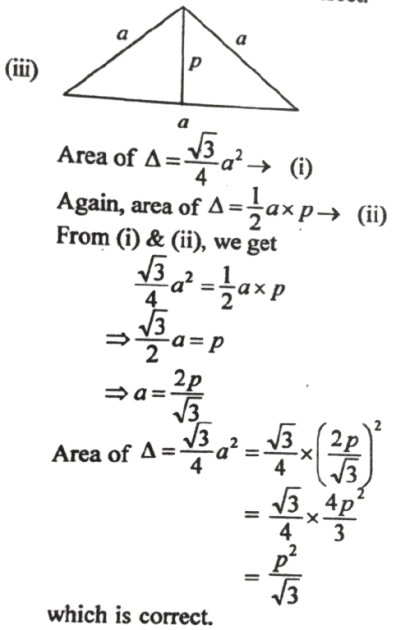
(iii) If P is the altitude of an equilateral triangle, then is area ∆ is given by ∆= p2/√3
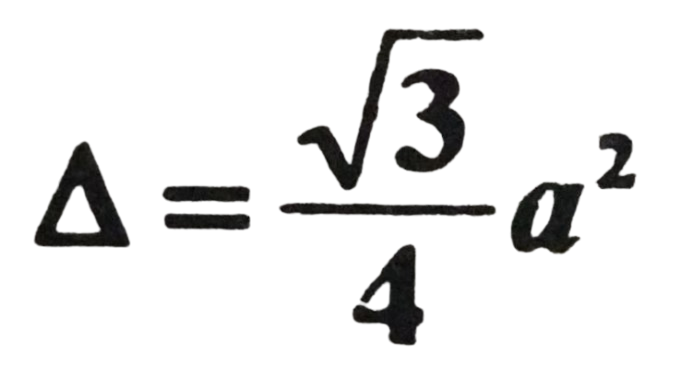
(iv) Area ∆ of an equailateral triangle with side a is,
(a) (i), (iii)
(b) (ii), (iii)
(c) (i), (ii), (iii)
(d) (i), (ii), (iii), (iv)
Ans:
(ii) The area of a ∆, with sides a, b and c. and Perimeter s is given by

(iv) Area ∆ of an equilateral triangle with side a is
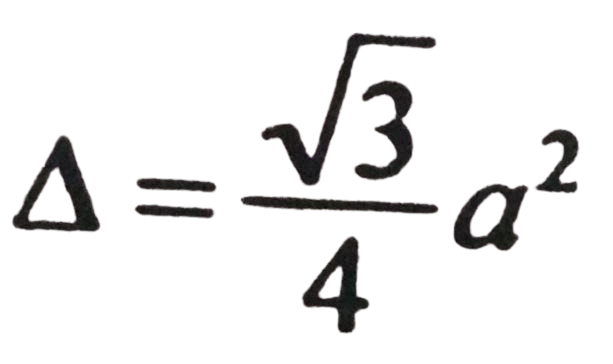
Statement (iv) is correct.
The correct option is (d).
13. Which of the following statements is true or false
(P) The area of an equilateral triangle with side 6√3 cm is 27√3 cm².
(Q) The area of an equilateral triangle with altitude 2√3 cm is 4√3 cm².
(a) P is true, Q is false
(b) P is false, Q is true
(c) Both P and Q are true
(d) Both P and Q are false
Ans: (P) The area of an equilateral
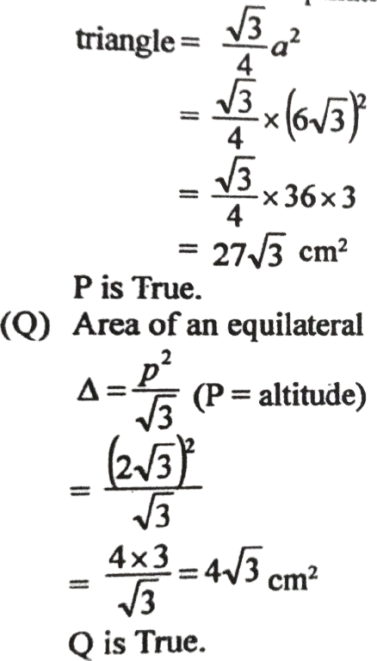
The correct option is (c).
Subject Ka Complete Video Solution Dekhein
Step-by-step easy concept explanation aur full questions Answer ke liye watch karein ya app download karein:

 Buy Now