
NCERT Class 8 Social Science Chapter 1 Natural Resources and Their Use Solutions English Medium As Per New Syllabus. to each chapter is provided in the list so that you can easily browse through different chapters NCERT Class 8 Social Science Chapter 1 Natural Resources and Their Use Notes and select need one. NCERT Class 8 Social Science Chapter 1 Natural Resources and Their Use Question Answers Download PDF. NCERT Class 8 Social Science Texbook Solutions English Medium.
NCERT Class 8 Social Science Chapter 1 Natural Resources and Their Use
Also, you can read the NCERT book online in these sections Solutions by Expert Teachers as per Central Board of Secondary Education (CBSE) Book guidelines. CBSE Class 8 Social Science Textual Solutions in English Medium are part of All Subject Solutions. Here we have given NCERT Class 8 Social Science Notes, CBSE Class 8 Social Science English Medium Solutions for All Chapters, You can practice these here.
Natural Resources and Their Use
Chapter: 1
| Theme A — India and the World: Land and the People |
The Big Questions
1. How do we categorise natural resources? (Page 3)
Ans: Natural resources are the things that we get from nature and use in our everyday life. These resources are mainly divided into two types: renewable and non-renewable resources. Renewable resources are those which can be renewed naturally, such as sunlight, water, air and forests. Non-renewable resources are limited in nature and cannot be replaced quickly, such as coal, petroleum and natural gas. Natural resources are also classified as biotic and abiotic resources.
2. What is the connection between the distribution of natural resources and different aspects of life?
Ans: Natural resources play an important role in our daily lives. Their availability in different places affects the lifestyle, occupation and economic activities of people. For example, people living in areas with fertile soil and sufficient water mainly depend on agriculture, while people living in mineral-rich areas may work in mining and industries. Similarly, the availability of forests, rivers and other resources influences food habits, houses and occupations. In this way, the distribution of natural resources has a direct connection with the social and economic life of people.
3. What are the implications of unsustainable use / over-exploitation of natural resources?
Ans: The excessive and careless use of natural resources creates many problems for the environment. Cutting down too many trees leads to deforestation, soil erosion and loss of wildlife. Similarly, the excessive use of water causes water scarcity, while the overuse of coal and petroleum increases air pollution and global warming. It also reduces the availability of resources for future generations. Therefore, we should use natural resources wisely and avoid wasting them so that the environment remains balanced and future generations can also benefit from them.
THINK ABOUT IT
1.Take a pause. Look at yourself and the things around you. What is the origin of each of them? At some point they all lead to Nature; even the plastic button on your shirt. (Page 3)
Ans: Everything around us comes directly or indirectly from nature. The clothes we wear come from cotton or other natural fibres, while buttons may be made from plastic obtained from petroleum. Books and paper come from trees, and metals used in phones and other objects come from minerals. Even the food we eat comes from plants and animals. Thus, nature is the main source of almost everything we use in our daily lives.
2. What might be the different criteria we can use to categorise natural resources? (Page 4)
Ans: Natural resources can be categorised on the basis of their origin, availability, development and renewability. They can be classified as biotic and abiotic, renewable and non-renewable, and actual and potential resources. These categories help us understand the nature and uses of different resources.
LET’S EXPLORE
1. Identify human actions in your surroundings that result in Nature losing her ability to restore and regenerate. What types of interventions can be undertaken to restore Nature’s cycle? (Page 7)
Ans: Human activities such as cutting down trees, excessive use of water, throwing plastic and waste into rivers, air pollution and overuse of chemicals in agriculture reduce Nature’s ability to restore and regenerate. To restore Nature’s cycle, we should plant more trees, save water, reduce plastic use, recycle waste, protect forests and adopt eco-friendly farming methods. These steps can help maintain the balance of nature.
2. Take up a small research study to assess the types of renewable resources in your region; you may discuss with your teacher the geographical area of your study and sources to access information that you may need. What has been the change in their status over time? Make a small report that identifies the reasons for the change and what may be done. (Page 8)
Ans: A Small Report on Renewable Resources in My Region
My region has different types of renewable resources, such as sunlight, water, forests, wind and agricultural resources. Earlier, these resources were available in abundance, but their condition has changed over time due to population growth, deforestation, pollution and excessive use.
The number of trees and the availability of clean water have decreased in some areas. To protect these resources, we should plant more trees, save water, use solar energy, reduce pollution and avoid cutting trees unnecessarily. These steps will help conserve renewable resources for future generations.
3. What are the non-renewable resources that you use daily, directly or indirectly? What are the possible renewable substitutes? What are some of the steps we can take to transition to renewables? (Page 8)
Ans: We use many non-renewable resources in our daily lives, such as coal, petroleum, natural gas, iron and copper. These resources are used for electricity, transportation, heating and making different products. Renewable alternatives include solar energy, wind energy, hydropower and biofuels. We can reduce the use of non-renewable resources by using clean energy, saving electricity, using public transport and electric vehicles, and protecting forests. These steps will help us conserve natural resources and protect the environment for future generations.
4. Observe the map in Figure Notice the uneven distribution of important minerals. What types of resources are available in your region? How are they distributed? ( Page 9)
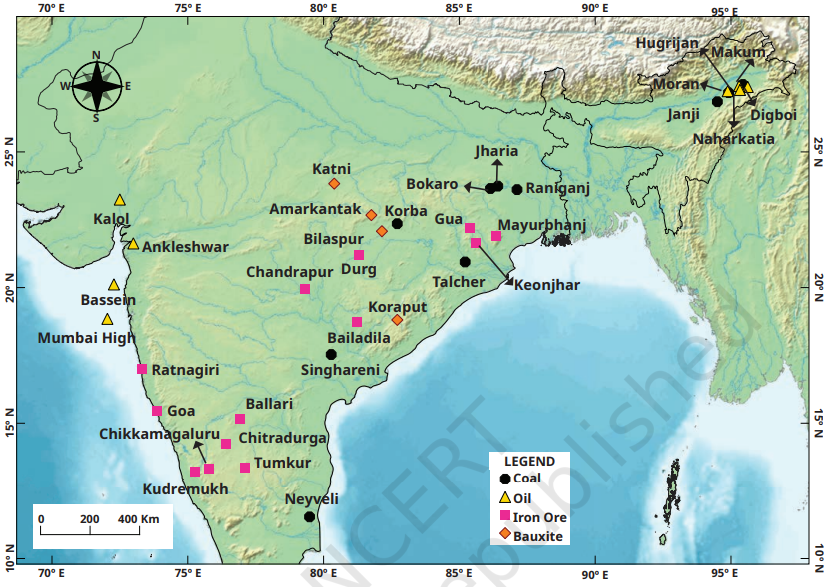
Ans: In my region, Assam, important natural resources include petroleum, natural gas, coal, limestone and clay. Petroleum and natural gas are mainly found in Digboi, Naharkatiya, Moran and Duliajan. Coal is found in the Makum and Margherita areas, while limestone is available in Karbi Anglong and Dima Hasao. These resources are not equally distributed throughout the state. Most mineral resources are concentrated in Upper Assam and the hill districts.
5. Select any two natural resources. Gather information about their availability across different parts of India. Mark them on a map. What do you observe about their distribution? What are the types of economic activities connected with them? (Page 10)
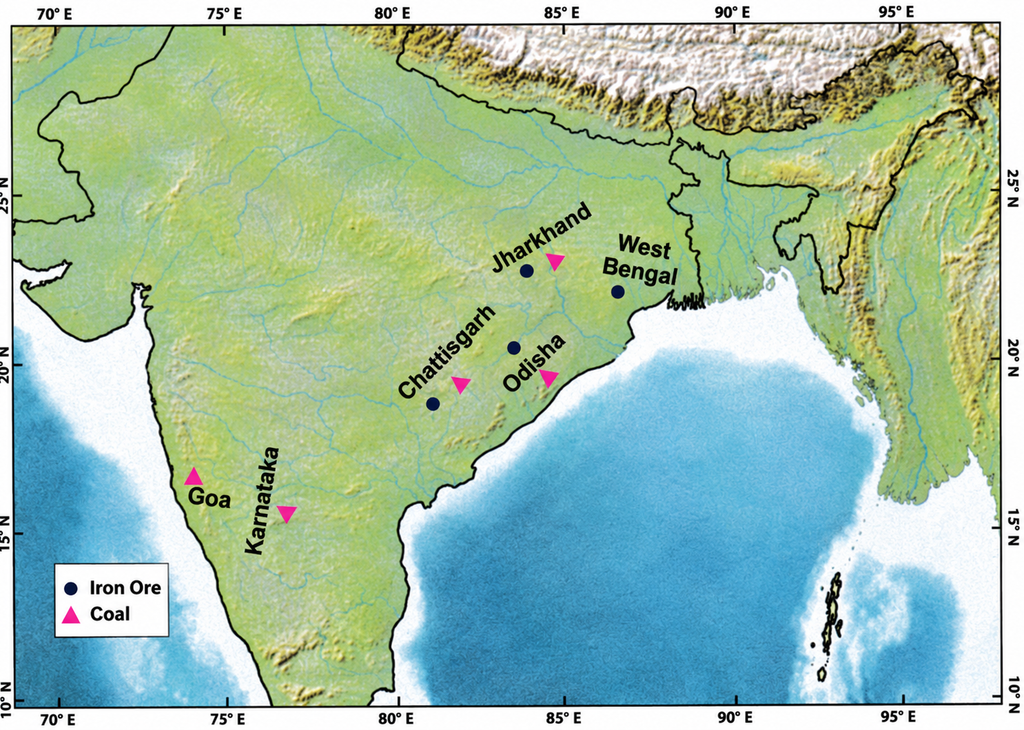
Ans: Coal and iron ore are two important natural resources found in different parts of India. Coal is mainly found in Jharkhand, Chhattisgarh, Odisha, and West Bengal, while iron ore is mostly found in Odisha, Jharkhand, Chhattisgarh, Karnataka, and Goa. Their distribution is uneven, with large deposits located in the eastern and southern regions. This has led to the growth of mining and related industries in these areas. Coal is used mainly for electricity generation and in industries, while iron ore is used to make steel, supporting construction and manufacturing activities. They support many economic activities, such as mining, transportation, iron and steel industries and electricity generation.
6. Discuss the implications of extracting the natural resources in those parts for current and future generations. Suggest ways in which we can use Nature’s gifts in responsible ways. (Page 10)
Ans: Excessive extraction of coal and iron ore can cause deforestation, air and water pollution, soil erosion and loss of wildlife. It also reduces the availability of resources for future generations. We should use these resources carefully, control mining activities, plant more trees, recycle metals and promote renewable energy. This will help protect nature and conserve resources for the future.
7. Find out about such a conflict in the international context. Discuss your findings in the class. (Page 10)
Ans: An example of an international conflict over natural resources is the Nile River water dispute between Egypt, Ethiopia and Sudan. Ethiopia built the Grand Ethiopian Renaissance Dam (GERD) on the Nile River to generate electricity. Egypt and Sudan are concerned that the dam may reduce their water supply, which is important for agriculture and daily life. This dispute shows how the sharing of natural resources can create conflicts between countries. Proper discussion, cooperation and agreements are necessary to solve such problems peacefully.
8. What do you think are the different inputs required to enable the use of the natural resources available in different geographical areas? ( Page 11)
Ans: To make proper use of natural resources in different geographical areas, we need skilled people, modern technology, proper planning and good infrastructure. Roads, electricity and transportation are also important for developing these resources. Along with this, good management, investment and environmental protection are necessary. We should also involve local communities and avoid overusing resources so that they remain available for future generations.
Questions and Activities
1. What can make what is today a renewable resource non-renewable tomorrow? Describe some actions that can prevent this from happening.
Ans: Excessive use, pollution and careless management can make a renewable resource non-renewable. For example, cutting trees faster than they can grow and overusing groundwater can cause their depletion. We can prevent this by planting trees, saving water, controlling pollution and using resources wisely.
2. Name five ecosystem functions that serve humans.
Ans: Five important ecosystem functions that serve humans are:
(i) Climate Regulation: Ecosystems absorb carbon dioxide and release oxygen, helping to maintain climate balance.
(ii) Soil Fertility: Decomposition and nutrient cycling help maintain soil fertility, which is important for agriculture.
(iii) Provision of Food: Ecosystems provide food such as plants, fruits, fish and animals.
(iv) Clean Air and Water: Forests and wetlands help purify air and water.
(v) Pollination: Bees, butterflies and other insects help pollinate crops and support food production.
3. What are renewable resources? How are they different from non-renewable ones? What can people do to ensure that renewable resources continue to be available for our use and that of future generations? Give two examples.
Ans: Renewable resources are those resources that can be naturally renewed within a short period. Examples include sunlight, water and forests. Non-renewable resources are limited and take millions of years to form, such as coal and petroleum. We can protect renewable resources by using them carefully, planting trees and avoiding wastage. For example, we should save water and plant more trees to ensure their availability for future generations.
4. Identify cultural practices in your home and neighbourhood that point to mindfulness in the use of natural resources.
Ans: In my home and neighbourhood, people follow many practices to save natural resources. We reuse old clothes and containers, avoid wasting food, collect rainwater, switch off unnecessary lights and use cloth bags instead of plastic bags. These habits help conserve natural resources and protect the environment.
5. What are some considerations to keep in mind in the production of goods for our current use?
Ans: While producing goods, we should use renewable resources and eco-friendly materials. We should save energy, reduce pollution and avoid wasting materials. Recycling and reusing products can also help conserve resources. Goods should be made durable so that they do not need frequent replacement. We should also support local producers and use resources responsibly to protect the environment for future generations.
Subject Ka Complete Video Solution Dekhein
Step-by-step easy concept explanation aur full questions Answer ke liye watch karein ya app download karein:


 Buy Now