
Multimodal AI is transforming the way artificial intelligence understands and creates content. Not long ago, most AI tools focused on a single task, such as generating text or recognizing images. Today, AI can work with text, images, audio, and video at the same time, making it more capable than ever before.
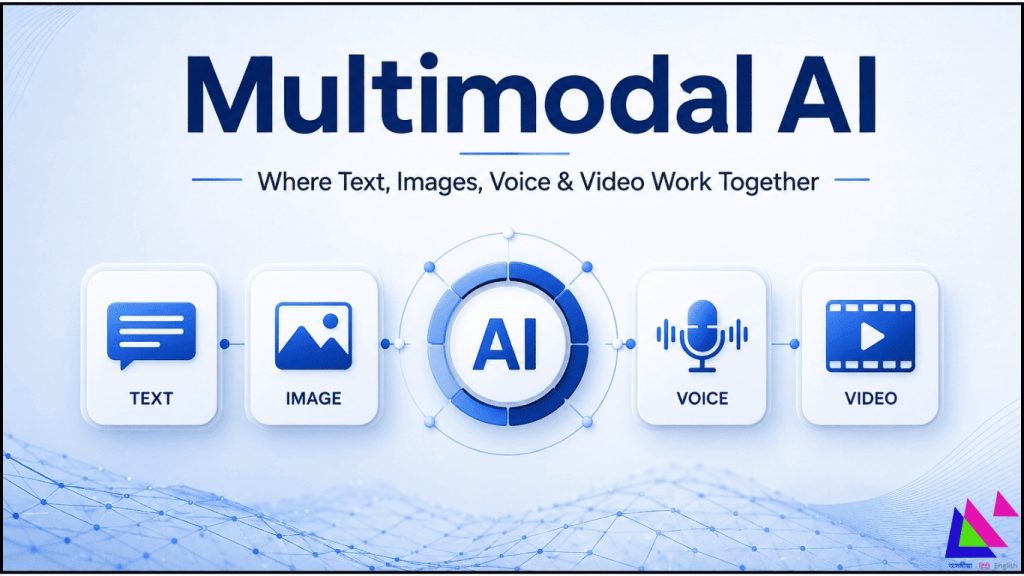
This shift is changing how people create content, communicate, and solve problems. Instead of switching between different software for writing, designing, editing, and voice generation, creators and businesses can now complete multiple tasks within a single AI-powered workflow.
What Is Multimodal AI?
Unlike traditional AI models that work with one type of data, multimodal systems can process different types of information together.
These models can understand and generate:
- Text
- Images
- Audio
- Video
By combining multiple inputs, they understand context more accurately and produce results that feel more natural and useful.
Read Also: AI World Models Explained: How AI Is Learning to Understand the Real World
Latest Multimodal AI Innovations
1. Google Gemini 2.5 Flash Image
Google’s Gemini 2.5 Flash Image makes image generation and editing much easier.
Instead of learning complicated editing software, users can simply describe the changes they want. The model can generate new images, replace objects, edit backgrounds, and improve visuals using natural language prompts.
Highlights:
- AI image generation.
- Natural-language image editing.
- Object replacement.
- Background editing.
2. Google Veo 3
Google Veo 3 is designed to create high-quality AI-generated videos from simple text prompts.
It can generate realistic scenes, smooth motion, and lip-synced speech, making it useful for content creators, marketers, educators, and filmmakers looking to produce videos more efficiently.
Highlights:
- AI video generation.
- Lip-synced speech.
- Realistic motion.
- Cinematic-quality videos.
3. Microsoft MAI-1 Preview & MAI-Voice-1
Microsoft is expanding its AI ecosystem with MAI-1 Preview and MAI-Voice-1, focusing on enterprise voice and audio applications.
These models are designed to improve speech recognition, transcription, customer support, and business communication through more advanced audio processing.
Highlights:
- Voice recognition.
- Audio transcription.
- Enterprise AI solutions.
- Customer support automation.
Why Does This Matter?
Creating digital content often requires several different tools. One application is used for writing, another for image editing, another for video production, and another for voice recording.
Modern AI is bringing many of these capabilities together, allowing creators and businesses to work faster while reducing repetitive tasks.
Some of the biggest advantages include:
- Faster content creation.
- Better image and video editing.
- More natural human-AI interaction.
- Improved accessibility through voice technology.
- Increased productivity across creative and business workflows.
Pros & Cons
Pros
- Handles text, images, audio, and video in one workflow.
- Saves time by reducing manual editing.
- Makes creative tools easier for beginners.
- Improves productivity for businesses and creators.
- Supports more natural AI interactions.
Cons
- AI-generated content may still contain errors.
- Premium features often require paid subscriptions.
- Deepfakes and synthetic media raise ethical concerns.
- Copyright rules are still evolving.
- Human review is still necessary for important content.
The Future of AI
The future of Multimodal AI looks incredibly promising.
As the technology continues to improve, AI systems are expected to edit videos in real time, understand voice and visuals more accurately, generate complete multimedia projects from a single prompt, and provide more natural interactions across different devices and platforms.
Rather than replacing creativity, these systems are becoming powerful tools that help people work faster and bring ideas to life more efficiently.
Conclusion
Multimodal AI is changing the way people create, communicate, and interact with technology. By combining text, images, audio, and video into a single intelligent system, it is making digital content creation faster, smarter, and more accessible.
Although challenges such as accuracy, ethics, and copyright still need attention, the technology is advancing rapidly. As more businesses and creators adopt these tools, multimodal AI is expected to play a major role in the future of content creation and digital innovation.
FAQs
1. What is this technology?
Ans: It is an AI system that can understand and generate multiple types of content, including text, images, audio, and video.
2. How is it different from traditional AI?
Ans: Traditional AI usually focuses on one type of data, while newer systems combine multiple formats to better understand context and generate more accurate results.
3. Where is it being used?
Ans: It is widely used in content creation, marketing, education, healthcare, customer support, entertainment, and business automation.
4. Is it useful for businesses?
Ans: Yes. Businesses use these AI systems to automate workflows, improve customer communication, generate marketing content, and increase productivity.
5. What does the future look like?
Ans: Future AI models are expected to combine text, images, voice, and video even more effectively, making content creation and human-AI interaction faster and more natural.







 Buy Now