
AI Agents Explained: Why Everyone Is Talking About the Future of AI
Artificial intelligence has become a part of everyday life. People use it to write emails, generate images, summarize documents, learn new skills, and even write computer code. But the technology is now entering a new phase. Instead of simply answering questions, it is beginning to complete real tasks on its own.
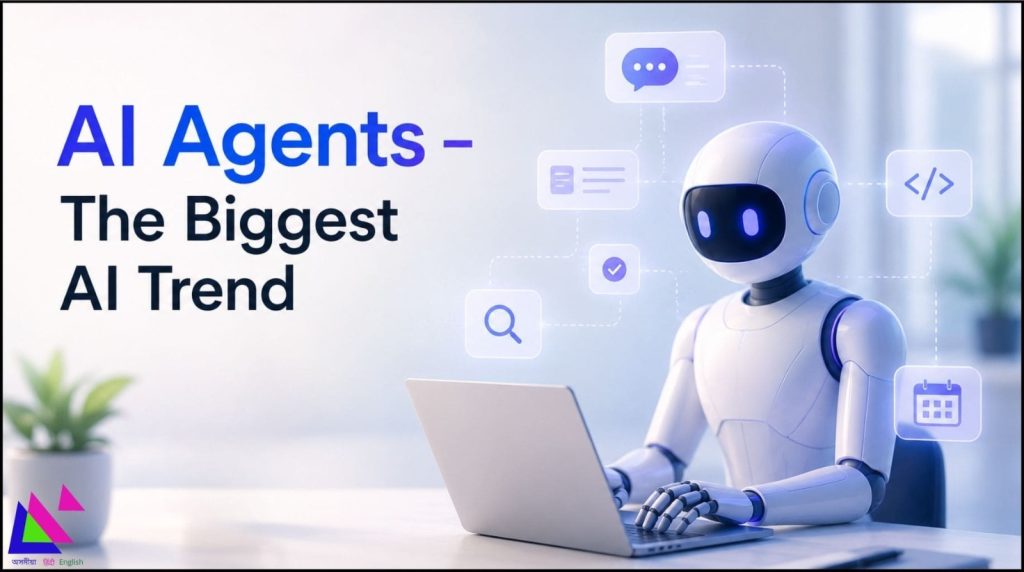
This is where AI Agents come in. Rather than waiting for one prompt after another, these intelligent systems can understand a goal, break it into smaller steps, use different tools when needed, and work toward completing the entire task. It’s one of the biggest reasons why businesses and technology companies are paying close attention to this rapidly evolving technology.
Read Also: ChatGPT & AI Tools Are Transforming Student Learning in 2026
What Are AI Agents?
Imagine having a digital assistant that doesn’t just give suggestions but actually gets the work done. Unlike a traditional chatbot that replies to one question at a time, these systems can plan, reason, and perform multiple actions to reach a specific goal. They can gather information, organize it, and continue working until the task is complete.
For example, if you ask for a research report, it can collect information, organize the findings, prepare a draft, and even improve it based on your feedback instead of stopping after a single response.
How Do They Work?
Although every system is designed differently, most follow a similar workflow:
- Understand the user’s objective.
- Break the task into smaller steps.
- Collect the required information.
- Use available tools or software when necessary.
- Review the final result before completing the task.
This ability to plan ahead is what separates them from traditional chatbots.
Where Are These Systems Being Used?
The technology is already being explored across several industries.
Customer Support: Businesses use intelligent assistants to answer customer queries, manage service requests, and reduce response times for common issues.
Software Development: Developers use these tools to write code, explain programming concepts, detect errors, and automate repetitive development tasks.
Business Operations: Organizations are using them to summarize meetings, organize documents, prepare reports, and streamline everyday workflows.
Education: Teachers and students can benefit from personalized study plans, practice questions, lesson summaries, and learning support.
Healthcare: Healthcare organizations are exploring their use for administrative work such as documentation, scheduling, and managing routine processes while keeping professionals involved in important decisions.
Why Is Everyone Talking About This Technology?
The answer is simple—it goes beyond answering questions.
People want AI that can actually help them finish work instead of simply providing information.
Some of the biggest advantages include:
- Automating repetitive tasks.
- Completing multi-step workflows.
- Saving valuable time.
- Improving productivity.
- Working with different software and digital tools.
- Reducing manual effort for routine activities.
As AI models continue to improve, these capabilities are expected to become even more useful.
Challenges That Still Need Attention
Like any emerging technology, these intelligent systems are not perfect.
They can misunderstand instructions, generate incorrect information, or make mistakes while performing complex tasks. Privacy, security, and reliability also remain important concerns. Because of this, experts believe human supervision is still necessary, especially in areas such as healthcare, finance, legal services, and public administration.
Conclusion
AI Agents represent a major shift in the way people interact with artificial intelligence. Instead of acting as simple chatbots, they are designed to understand goals, plan actions, and complete meaningful tasks with minimal guidance. As the technology continues to evolve, these intelligent assistants are expected to become an important part of workplaces, classrooms, and everyday life. The future of AI is not just about providing answers—it’s about helping people get real work done.
FAQs
1. What are AI Agents?
Ans: AI Agents are intelligent systems that can understand a goal, plan the required steps, and complete tasks with minimal human input.
2. How are they different from chatbots?
Ans: Chatbots mainly answer questions, while these systems can plan, take action, and complete multi-step tasks.
3. Where are they used?
Ans: They are being used in customer support, software development, education, healthcare, and business operations.
4. Can they work without humans?
Ans: They can automate many tasks, but human supervision is still important, especially for sensitive or critical work.
5. Why are they becoming popular?
Ans: They save time, improve productivity, automate repetitive work, and can handle complete workflows instead of responding to a single prompt.







 Buy Now