
AI World Models Explained: How AI Is Learning to Understand the Real World
AI World Models are changing how artificial intelligence understands the world around it. Earlier AI systems were designed to recognize images, answer questions, or complete specific tasks. Today’s advanced models are moving beyond that by learning how objects, people, and environments interact. This allows AI to predict what might happen next instead of simply reacting to what it sees.
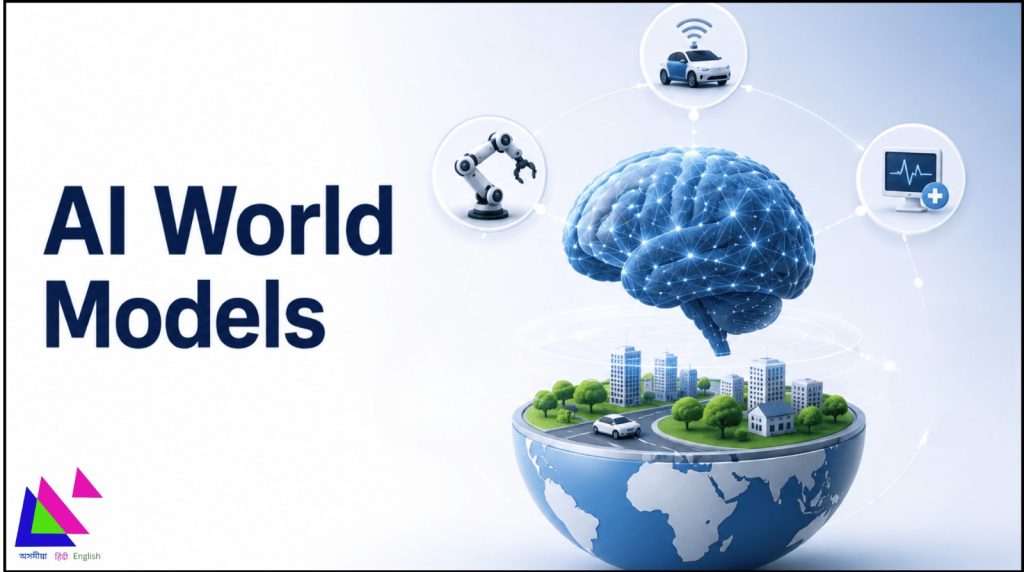
What Are World Models in Artificial Intelligence?
AI World Models are advanced AI systems that help machines understand how the real world works instead of simply recognizing objects or responding to prompts.
They are designed to:
- Understand relationships between people, objects, and environments.
- Predict what is likely to happen next based on previous observations.
- Learn from images, videos, and sensor data.
- Make smarter decisions by understanding context instead of reacting to a single input.
- Adapt to changing situations with greater accuracy.
For example, a self-driving car doesn’t just detect a pedestrian. It predicts where the person is likely to move and adjusts its speed or direction to improve safety. This ability to understand and anticipate real-world situations is what makes AI World Models a major advancement in artificial intelligence.
Read Also: Best AI Search Engine: ChatGPT, Google AI Mode or Perplexity—Which One Should You Choose?
Why Is This Technology Important?
Traditional AI performs well when solving one specific task, but real life is rarely that simple.
World models help AI understand changing environments, making it more useful in situations where planning and prediction are essential.
They help AI:
- Predict what could happen next.
- Understand movement and spatial relationships.
- Adapt to changing environments.
- Make faster and smarter decisions.
- Reduce errors in complex situations.
Where Are They Being Used?
Although the technology is still developing, it’s already finding practical applications across different industries.
1. Self-Driving Vehicles: Autonomous vehicles use AI to understand traffic conditions, predict pedestrian movement, and make safer driving decisions.
2. Robotics: Modern robots can navigate warehouses, avoid obstacles, and complete tasks more efficiently by understanding their surroundings.
3. Healthcare: Doctors and researchers are using AI to analyze medical images, detect diseases earlier, and support clinical decision-making.
4. Manufacturing: Factories use intelligent systems to monitor equipment, predict maintenance needs, and improve production efficiency.
5. Gaming and Virtual Reality: Game developers use advanced AI to create smarter characters and more realistic virtual environments that react naturally to player actions.
The Future of AI
The future of AI World Models goes far beyond today’s AI assistants.
As these systems continue to improve, they’ll be able to understand complex environments, work alongside humans, and make better decisions with less supervision.
In the coming years, businesses are expected to use this technology to:
- Build smarter robots.
- Improve autonomous transportation.
- Personalize healthcare services.
- Automate industrial operations.
- Create more immersive virtual experiences.
- Support scientific research and simulations.
Rather than replacing people, these systems will help professionals solve problems faster and make more informed decisions.
Conclusion
AI World Models represent one of the biggest advances in modern artificial intelligence. By helping machines understand how the real world works instead of simply recognizing data, they open the door to safer, smarter, and more capable AI systems.
While the technology is still evolving, its potential is already clear. As research continues, world models are expected to become a key part of future AI applications across transportation, healthcare, manufacturing, robotics, and many other industries.
FAQs
1. What are world models in artificial intelligence?
Ans: World models are AI systems that learn how objects, people, and environments interact, allowing them to predict outcomes and make better decisions.
2. How are world models different from traditional AI?
Ans: Traditional AI mainly recognizes patterns or answers questions, while world models understand context, predict future events, and support decision-making.
3. Where are world models used?
Ans: They are used in self-driving cars, robotics, healthcare, manufacturing, gaming, and scientific research.
4. Why are world models important?
Ans: They help AI understand real-world situations, improve safety, adapt to changing environments, and make more accurate decisions.
5. What is the future of world models?
Ans: As the technology advances, world models are expected to power smarter robots, autonomous vehicles, intelligent assistants, and other AI systems that can better understand and interact with the real world.







 Buy Now