
AI Shopping Is Changing Online Retail: How Retailers Are Reaching Customers Differently
AI Shopping is transforming the way consumers discover, research, and compare products online. Instead of relying entirely on traditional search engines and visiting multiple websites, shoppers can now use AI-powered tools to find recommendations, compare products, and get personalized buying guidance.
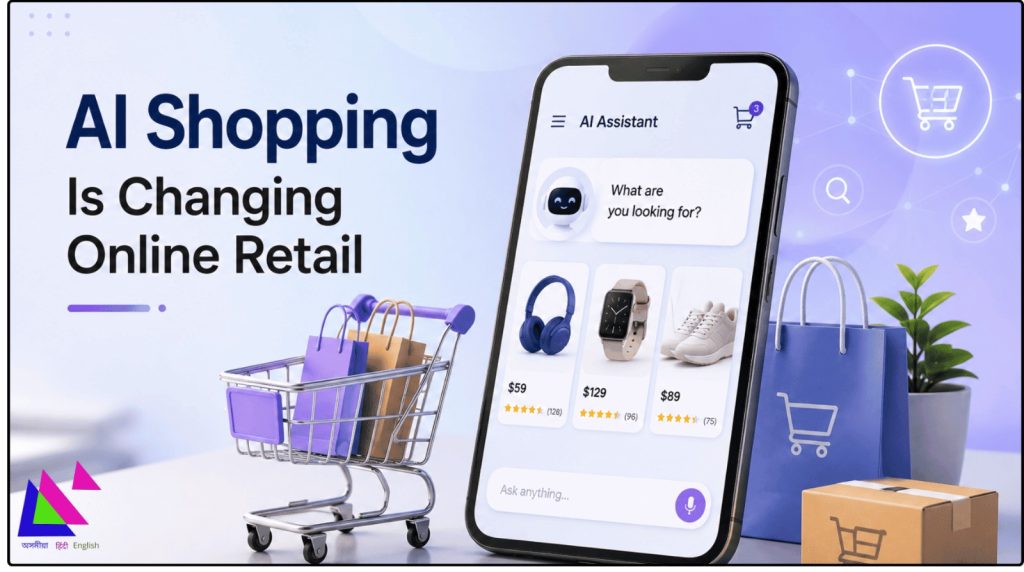
This shift is changing the online shopping journey and creating a new challenge for retailers: making their products visible not only in traditional search results, but also across AI-powered discovery and recommendation platforms.
How Is AI Changing Online Shopping?
The biggest change is happening during product discovery.
Instead of searching for a specific product, shoppers can describe what they actually need. For example, someone might ask an AI assistant to find a laptop for college under a certain budget, compare several options, and explain which one is the better choice.
AI can help organize that information and make the research process faster.
Shoppers Can Use AI To:
- Compare products and features.
- Find options within a budget.
- Understand complicated specifications.
- Get personalized recommendations.
- Research products before visiting a store or website.
This makes AI Shopping feel more like talking to a personal shopping assistant than using a traditional search box.
Why Are Shoppers Turning to AI?
Online shopping can involve a lot of research. Customers may have to compare dozens of products, read reviews, check specifications, and look at different prices.
AI can simplify some of this process by bringing relevant information together in a conversational format.
Recent research and industry reports show that consumers are increasingly experimenting with AI platforms such as ChatGPT and Google Gemini for product discovery, although trust and accuracy remain important concerns.
Read Also: AI Coding Assistant: Best AI Tools for Developers and Beginners
How Are Retailers Responding?
Retailers are starting to pay more attention to how their products appear in AI-powered search and recommendation systems.
For businesses, this means product information needs to be clear, accurate, and regularly updated.
Important Areas for Retailers
- Product descriptions: Keep information detailed and easy to understand.
- Pricing: Make sure prices are accurate and updated.
- Availability: Keep stock information current.
- Product specifications: Clearly explain important features.
- Images: Use clear and relevant product images.
- Customer reviews: Make genuine reviews easy to find.
The goal is simple: make it easier for both customers and AI systems to understand what the product offers.
How AI Recommendations Help Shoppers
- Traditional search usually provides a list of websites or products.
- AI can offer more personalized recommendations based on individual needs.
- Shoppers can mention their budget, preferred brand, requirements, and experience level.
- AI can compare different options and help narrow down choices.
- Recommendations can make product research faster and easier.
- AI may sometimes use incomplete or outdated information.
- Shoppers should always verify price, specifications, availability, and reviews before purchasing.
Retailers Want AI Traffic
Retailers are trying to benefit from AI-driven product discovery while still bringing customers to their own websites.
Key Points:
- AI platforms can help customers discover products faster.
- Retailers want more traffic from AI-powered shopping platforms.
- Businesses still want customers to visit their own websites.
- Direct website visits help retailers build long-term customer relationships.
- Customer data remains valuable for marketing and personalization.
- The challenge is balancing AI visibility with direct customer engagement.
What Does This Mean for E-Commerce SEO?
Traditional SEO isn’t disappearing, but the way people discover products is expanding.
Retailers now need to think about how their product information can be understood by AI systems as well as traditional search engines.
Businesses Should Focus On:
- Clear product descriptions.
- Accurate pricing and availability.
- Complete product specifications.
- Useful customer reviews.
- Reliable brand information.
- Consistent information across platforms.
Good product information becomes even more important when AI is helping customers compare different options.
Benefits for Retailers
1. Better Product Discovery: AI can help customers find products that match their needs more closely.
2. Personalized Recommendations: Shoppers can receive suggestions based on their preferences and requirements.
3. Faster Research: Customers can compare several products without manually opening multiple pages.
4. Better Customer Experience: Conversational shopping can make online research easier and more interactive.
5. New Traffic Opportunities: Retailers can potentially reach customers through emerging AI-powered discovery channels.
Challenges Retailers Need to Consider
- Accuracy: Incorrect information can lead to poor recommendations.
- Trust: Customers may question how recommendations are generated.
- Privacy: Shopping and customer data must be handled responsibly.
- Competition: More brands will compete for visibility in AI recommendations.
- Control: Retailers may have less control over how AI platforms present their products.
The Future of AI Shopping
The future could look very different from today’s search-based shopping experience.
Instead of visiting several websites to research a product, customers may increasingly describe what they want and let AI help with much of the comparison process.
Major technology companies are already moving in this direction. Google has introduced AI-powered shopping experiences, while OpenAI has expanded product discovery and comparison features in ChatGPT.
In the future, AI could help shoppers move through more of the buying journey—from discovering a product to comparing options and deciding what fits their needs.
Conclusion
AI Shopping is changing how customers discover and research products online. The biggest change isn’t simply that AI can recommend products; it’s that people are beginning to use AI earlier in their buying journey.
For retailers, adapting to this shift means keeping product information accurate, building customer trust, and making products easier to discover through both traditional search and AI-powered platforms.
Traditional search will remain important, but online shopping is becoming more conversational. Retailers that understand this change early may be better prepared for the next stage of e-commerce.
FAQs
1. What is AI Shopping?
Ans: AI Shopping uses artificial intelligence to help people discover, compare, research, and make decisions about products through AI-powered tools.
2. How are people using AI for shopping?
Ans: People can ask AI to compare products, find options within a budget, explain features, and provide recommendations based on their needs.
3. How can retailers prepare for AI-powered shopping?
Ans: Retailers should maintain accurate product descriptions, prices, stock information, specifications, images, and customer reviews.
4. Will AI replace traditional search?
Ans: Not completely. Traditional search remains useful, but AI is adding a more conversational way to discover and research products.
5. Can shoppers always trust AI recommendations?
Ans: No. AI can sometimes provide incomplete or outdated information. Customers should verify important details such as price, specifications, availability, reviews, and return policies before purchasing.







 Buy Now