
Humanoid Robots: Are We Near a “ChatGPT Moment” for Robotics?
Humanoid Robots are attracting new attention as artificial intelligence improves their ability to understand instructions and interact with the physical world.
Unlike traditional industrial robots that perform fixed tasks, humanoid robots are designed to operate in environments created for people. Their human-like shape may allow them to move through workplaces, use tools and perform tasks without requiring every building to be redesigned.
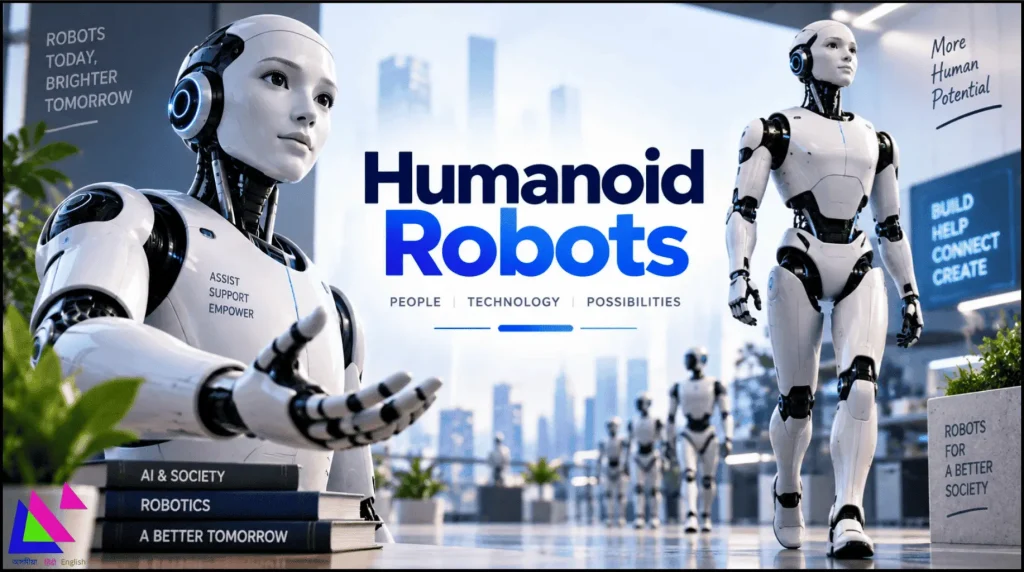
However, impressive demonstrations should not be confused with widespread real-world deployment. Building a robot that can move reliably, understand complex instructions and safely work around people remains extremely difficult.
Why Are Humanoid Robots Getting Smarter?
Recent advances in AI have improved how machines understand language, images and other information.
A robot can potentially combine these capabilities with cameras, sensors and physical movement. This allows it to receive an instruction, analyse its surroundings and attempt to perform a task.
Reuters reported in August 2026 that Unitree CEO Wang Xingxing said robotics could be approaching a potential “ChatGPT moment,” while also acknowledging that major breakthroughs in general-purpose robot intelligence may still take years.
Also Read: AI in Manufacturing: How Artificial Intelligence Is Making Factories Smarter
What Can Humanoid Robots Do?
Current capabilities vary significantly between companies and models.
Some humanoid robots can demonstrate tasks such as:
- Walking and balancing.
- Picking up objects.
- Carrying materials.
- Performing basic repetitive tasks.
- Following selected spoken or programmed instructions.
- Operating in controlled workplace environments.
However, reliability remains a major challenge.
A robot that performs a task successfully in a demonstration may not perform equally well in every real-world situation.
Why Use a Human-Like Design?
Most workplaces are designed for humans.
Doors, stairs, tools and workstations are generally built around the human body.
This is one reason companies are exploring Humanoid Robots. In theory, a robot with arms, hands and legs could work in existing environments.However, human-like design also creates engineering challenges. Walking, balancing and manipulating objects safely require complex hardware and software.
Potential Benefits
- Support for Repetitive Work: Robots may handle selected repetitive tasks.
- Work in Human Environments: A humanoid form could potentially use existing spaces and tools.
- Continuous Operation: Robots can operate for long periods when properly maintained and powered.
- Workplace Assistance: They may support workers with physically demanding tasks.
- Flexibility: Advanced AI could eventually allow robots to adapt to different tasks.
Major Challenges
- Reliability: Robots must perform consistently outside controlled demonstrations.
- Safety: Working near people requires reliable safety systems.
- Battery Limitations: Mobile robots need sufficient operating time.
- High Costs: Advanced robotics hardware remains expensive.
- Complex Physical Tasks: Human hands and movement are difficult to reproduce.
- Limited Real-World Intelligence: Understanding unexpected situations remains challenging.
These limitations explain why Humanoid Robots are still at an early stage of commercial adoption.
Will Robots Replace Human Workers?
It is too early to assume that humanoid robots will replace large numbers of workers.Initially, they are more likely to appear in specific environments where tasks are repetitive and predictable.
Humans remain better at handling unusual situations, complex judgment and many forms of communication.Instead of complete replacement, the near-term model may involve humans and robots working together.
Are We Really Near a “ChatGPT Moment”?
The comparison refers to the possibility of a breakthrough that makes advanced robotics much more accessible or capable.
AI language models improved rapidly when researchers developed systems that could understand and generate useful responses across many tasks.Robotics faces an additional challenge: the physical world.
A robot must not only understand an instruction. It must move, balance, see objects accurately and respond safely when something unexpected happens.That makes the journey for Humanoid Robots more complex than the development of chatbots.
Conclusion
Humanoid Robots are becoming more capable as AI improves machine perception and decision-making. However, the technology still faces significant challenges involving reliability, cost, safety and real-world adaptability.
The industry may be moving toward an important breakthrough, but a true “ChatGPT moment” for robotics will require robots that can perform useful tasks reliably outside carefully controlled demonstrations.
For now, the future of Humanoid Robots looks promising—but widespread adoption will depend on whether companies can turn impressive technology into dependable real-world machines.
FAQs
1. What are humanoid robots?
Ans: They are robots designed with a human-like body structure, often including a head, torso, arms and legs.
2. What can humanoid robots do today?
Ans: Depending on the system, they can walk, carry objects and perform selected repetitive tasks.
3. Why are companies building humanoid robots?
Ans: Human-like designs may allow robots to work in environments and with tools already designed for people.
4. Are humanoid robots ready for everyday use?
Ans: Not yet on a large scale. Reliability, safety and cost remain major challenges.
5. Will humanoid robots replace humans?
Ans: They may automate selected tasks, but humans remain important for complex judgment and unpredictable situations.
Subject Ka Complete Video Solution Dekhein
Step-by-step easy concept explanation aur full questions Answer ke liye watch karein ya app download karein:







 Buy Now