
Class 11 Physics Important Chapter 8 Gravitation Solutions English Medium As Per AHSEC New Syllabus to each chapter is provided in the list so that you can easily browse through different chapters NCERT Class 11 Physics Important Solutions and select need one. AHSEC Class 11 Physics Additional Notes English Medium Download PDF. HS 1st Year Physics Important Solutions in English.
Class 11 Physics Important Chapter 8 Gravitation
Also, you can read the NCERT book online in these sections Solutions by Expert Teachers as per Central Board of Secondary Education (CBSE) Book guidelines. NCERT Class 11 Physics Additional Question Answer are part of All Subject Solutions. Here we have given HS 1st Year Physics Important Notes in English for All Chapters, You can practice these here.
Gravitation
Chapter: 8
| IMPORTANT QUESTION AND ANSWER |
Answer the Following Questions:
1. State and explain Newton’s Universal Law of Gravitation.
Ans: Every two masses attract each other with a force proportional to the product of their masses and inversely proportional to the square of the distance between them. Mathematically,

Where G is the universal.
2. Explain Kepler’s three laws of planetary motion with diagrams.
Ans: 1st Law: Planets move in ellipses with Sun at one focus.
2nd Law: Line joining planet and Sun sweeps equal areas in equal time.
3rd Law: Square of orbital period T2 is proportional to cube of orbit radius R3
3. How does acceleration due to gravity vary with height above and depth below Earth’s surface?
Ans: Above Earth, g decreases approximately as g(h)=g(1−2hR). Below Earth, g(d)=g(1−dR), where h is height, d is depth, and R is Earth’s radius.
4. Describe the concept of gravitational potential energy and its relation with gravitational potential.
Ans: Gravitational potential energy is the work done to move a mass in a gravitational field.
It is negative and given by:
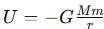
Gravitational potential is potential energy per unit mass.
5. What is escape speed? Derive the formula for escape speed from Earth’s surface.
Ans: Escape speed is the minimum speed to break free from Earth’s gravity. Using energy conservation, ve= √2gR, where g is acceleration due to gravity and R is Earth’s radius.
6. Explain how Cavendish’s experiment determines the gravitational constant G.
Ans: By measuring the tiny force between two known masses using a torsion balance, the force and torque are related to G, allowing calculation of its value.
7. What is the significance of the potential energy being negative for a bound gravitational system?
Ans: Negative potential energy indicates the system is bound; energy must be added (positive) to break the system apart (escape velocity).
8. How do satellites stay in orbit? Derive the expression for orbital velocity.
Ans: Satellites stay in orbit due to gravity acting as centripetal force. From

9. State the principle of superposition in the context of gravitation.
Ans: The net gravitational force on a mass due to multiple masses is the vector sum of the individual gravitational forces.
10. Discuss why gravitational force inside a hollow spherical shell is zero.
Ans: Forces from different parts of the shell cancel out because they act in all directions equally, resulting in zero net force inside.
Short Questions and Answer:
1. What is the value of the universal gravitational constant G?
Ans: 6.67×10⁻¹¹ Nm2/kg2
2. Define gravitational potential.
Ans: Gravitational potential at a point is the potential energy per unit mass at that point.
3. What is the difference between weight and mass?
Ans: Mass is amount of matter; weight is force due to gravity on that mass.
4. What is the escape speed on the Moon compared to Earth?
Ans: About 2.3 km/s, much less than Earth’s 11.2 km/s.
5. State Kepler’s second law.
Ans: A planet sweeps equal areas in equal time intervals.
6. How does the orbital period change with orbit radius?
Ans: Orbital period T is proportional to R3/2.

Hi, I’m Dev Kirtonia, Founder & CEO of Dev Library. A website that provides all SCERT, NCERT 3 to 12, and BA, B.com, B.Sc, and Computer Science with Post Graduate Notes & Suggestions, Novel, eBooks, Biography, Quotes, Study Materials, and more.


 Buy Now