
Rural Education in Karnataka: CSR Support for 1,000 Schools
Rural Education in Karnataka is getting a fresh push as the state government looks for more support from companies and private educational institutions. Karnataka Chief Minister D.K. Shivakumar has urged industries to use their Corporate Social Responsibility (CSR) funds to help improve government schools, especially in rural areas.
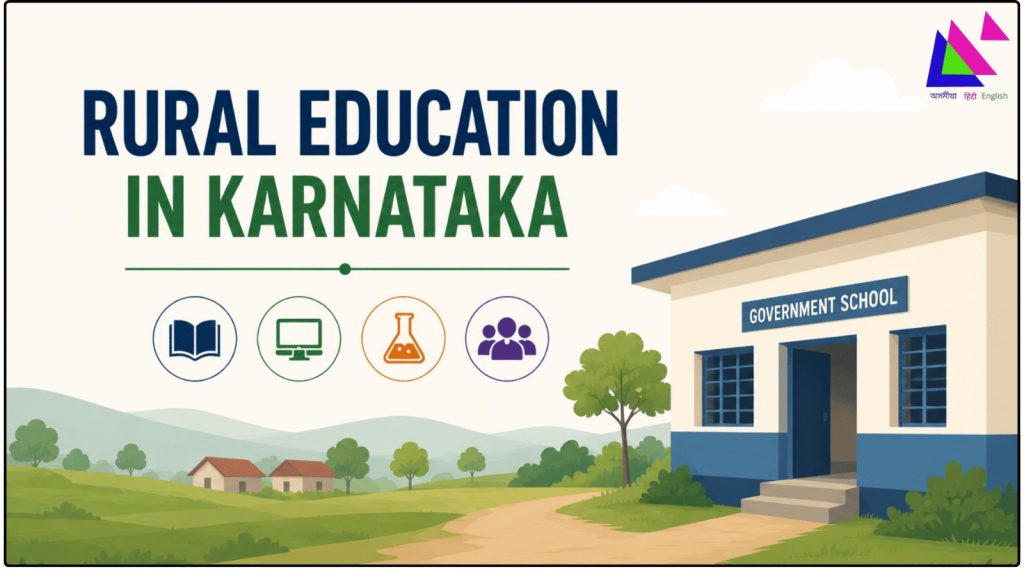
The plan is not only about repairing buildings or adding classrooms. The government wants rural students to get better access to technology, laboratories, libraries and skill-based learning. The broader aim is to make quality education available closer to students’ homes.
Why CSR Support Is Needed
Many government schools in rural areas still need better infrastructure and modern learning facilities. While government funding remains important, CSR support can provide additional resources for schools.
Companies can contribute towards:
- Digital and computer facilities.
- Science and STEAM laboratories.
- Libraries and smart classrooms.
- School transportation.
- Skill-development programmes.
- Renovation and maintenance.
These facilities can make learning more practical and interesting. For example, a science laboratory can allow students to understand concepts through experiments instead of learning only from textbooks.
1,000 Schools in the Current Programme
Karnataka has planned to upgrade 1,000 Karnataka Public Schools with the help of CSR and community support as part of its efforts to strengthen Rural Education in Karnataka. The government wants companies and organisations to take a long-term approach rather than treating CSR as a one-time donation, with support covering school facilities as well as their maintenance. Simply installing computers or building laboratories is not enough; schools also need regular maintenance, proper use of equipment and active involvement from teachers to ensure these facilities genuinely benefit students.
Bigger Target of 2,000 Schools
The state’s wider vision is to develop around 2,000 schools at the gram panchayat level through CSR support. Private educational institutions have also been encouraged to adopt government schools and participate in their development.
This could strengthen Rural Education in Karnataka by giving students in villages access to facilities that are often more easily available in urban schools.
The focus may include:
- School infrastructure and renovation.
- Technology-based learning.
- Libraries and laboratories.
- Skill-development activities.
- Maintenance of school facilities.
The objective is to ensure that students do not have to leave their villages simply because their local school lacks modern facilities.
Education and Rural Migration
The initiative is also linked to rural migration. Some families move towards cities because they believe their children will receive better education and career opportunities there.
Improving government schools in villages could reduce one reason for this migration. If children can access good education near their homes, families may have fewer reasons to move to cities only for schooling.
However, education is only one part of the issue. Better jobs, healthcare and other basic services are also necessary to make rural communities more attractive places to live.
What Could Students Gain?
If CSR projects are planned according to the actual needs of schools, students could benefit in several ways:
- Better access to digital learning.
- More practical science education.
- Improved libraries and classrooms.
- Opportunities to learn useful skills.
- Greater exposure to technology.
These improvements could help students prepare better for higher education and future employment.
Monitoring Will Be Important
CSR investment can make a real difference only when the funds are used properly. Every school may have different requirements, so projects should be based on local needs rather than following a single model for every school.
Regular monitoring can help ensure that:
- Funds are used for their intended purpose.
- Equipment remains functional.
- Students actually benefit from new facilities.
- Maintenance is carried out regularly.
Long-term monitoring will be especially important if the programme is expected to create lasting improvements.
Conclusion
The Karnataka government’s CSR initiative can strengthen Rural Education in Karnataka by improving classrooms, technology, laboratories and skill-based learning. With proper planning, maintenance and support from companies, schools and communities, rural students can get better educational opportunities without leaving their villages.
FAQs
1. Why is Karnataka seeking CSR support for schools?
Ans: To improve government schools and provide rural students with better learning facilities.
2. How many schools are being targeted?
Ans: The current programme focuses on 1,000 schools, with a larger vision of around 2,000 schools.
3. What can companies support?
Ans: CSR support can cover infrastructure, technology, laboratories, libraries, transportation and skill development.
4. Can better schools reduce rural migration?
Ans: They can help by giving families better educational options within their own communities.







 Buy Now