
AI Translation: Can Artificial Intelligence Really Break the Language Barrier?
Translation is changing how people communicate across languages. What once required a dictionary, phrasebook or professional translator can now often be handled instantly through a smartphone or computer.
Modern AI systems can translate text, speech and, in some cases, conversations in near real time. This technology is useful for travellers, businesses, students and people communicating with others around the world.
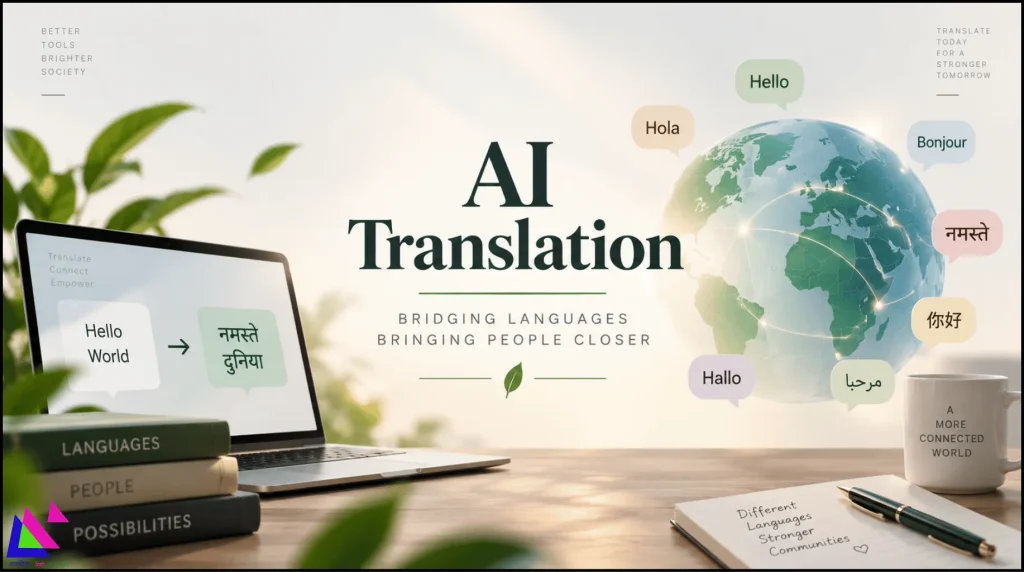
However, translating words correctly is not the same as understanding their complete meaning. Language includes culture, tone, humour and context, which can still create difficulties for AI systems.
How Does AI Translation Work?
AI translation systems are trained using large amounts of multilingual data. When a user enters text or speaks into a translation tool, the system analyses the input and generates an equivalent expression in another language.
Modern systems are better than older word-by-word translation tools because they can consider a larger part of the sentence and surrounding context. Still, AI Translation can make mistakes, especially when language contains unusual expressions or multiple possible meanings.
Where Is AI Translation Useful?
AI-powered translation can support many everyday situations:
- Travel: Helping people understand signs, menus and conversations.
- Education: Supporting students who work with material in other languages.
- Global Business: Making basic communication easier across international teams.
- Online Content: Helping people access information published in other languages.
- Customer Support: Assisting businesses that communicate with customers in multiple languages.
This makes Translation a useful communication tool, particularly when people need a quick understanding of another language.
Benefits
- Fast Results: Translation can be generated within seconds.
- Easy Access: Users can translate content using phones and computers.
- Multilingual Communication: People can communicate across more languages.
- Lower Barrier: Basic translation can become available without specialized knowledge.
- Real-Time Support: Some tools can translate speech during conversations.
Challenges and Limitations
Despite major improvements, AI does not always understand language perfectly.
- Cultural Context: A phrase may have a different meaning depending on the situation.
- Idioms and Humour: Direct translation can lose the intended meaning.
- Technical Accuracy: Medical, legal and scientific documents require careful review.
- Regional Differences: The same language can vary significantly between regions.
- Incorrect Output: AI may produce a fluent but inaccurate translation.
For important communication, AI Translation should be reviewed by a person who understands both languages and the relevant subject.
Also Read: AI for Climate Change: How Artificial Intelligence Can Help Predict Extreme Weather
Can AI Replace Human Translators?
AI is likely to change the translation industry, but complete replacement is unlikely.
For simple and everyday content, AI can provide quick and useful results. However, professional translators do more than replace words. They understand audience, culture, tone and purpose.
For example, translating a legal contract or a marketing campaign requires careful interpretation. A small error can change the meaning significantly.Therefore, human translators will remain especially important for high-stakes and creative work.
The Future of Translation
Translation technology is becoming more integrated into everyday devices and software. People may increasingly use AI to communicate with international colleagues, understand foreign content or travel without knowing the local language.
The most useful future may involve AI providing instant first drafts while humans handle important review and cultural adaptation.
Conclusion
AI Translation is making global communication faster and more accessible. It can help people understand text and speech across different languages within seconds.
However, language is more than vocabulary. Context, culture and intention can significantly change meaning. As a result, AI Translation works best as a powerful communication tool rather than a complete replacement for human linguistic expertise.
FAQs
1. What is AI Translation?
Ans: It uses artificial intelligence to translate text, speech or other language content from one language to another.
2. Can AI translate conversations in real time?
Ans: Yes, some AI tools can provide near real-time speech translation.
3. Is AI translation always accurate?
Ans: No. Accuracy can vary depending on the language, context and complexity of the content.
4. Can AI understand idioms and cultural expressions?
Ans: It can handle many common expressions, but unusual idioms and cultural context can still cause mistakes.
5. Will AI replace human translators?
Ans: AI can automate basic translation, but humans remain important for creative, technical and high-stakes content.
Subject Ka Complete Video Solution Dekhein
Step-by-step easy concept explanation aur full questions Answer ke liye watch karein ya app download karein:






 Buy Now