
Multidisciplinary learning is becoming an important part of India’s higher education system, combining academic knowledge with practical and career-oriented skills. Colleges and universities, especially in Tier-2 and Tier-3 cities, are increasingly adopting flexible programs that allow students to study subjects from multiple disciplines.
This transformation is strongly inspired by National Education Policy 2020, which promotes holistic, flexible, and future-oriented education.
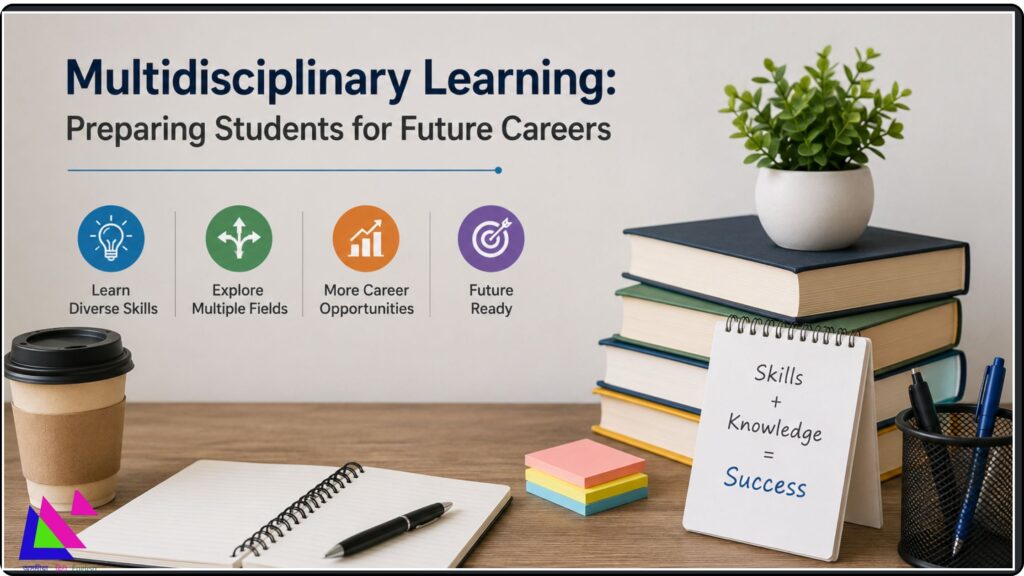
What Is Multidisciplinary Learning?
Multidisciplinary learning allows students to combine subjects from different fields instead of remaining limited to a single stream.
Examples include:
- Engineering with Management.
- Commerce with Data Analytics.
- Arts with Digital Media.
- Science with Entrepreneurship.
- Technology with Communication Skills.
This approach helps students gain broader knowledge and multiple skills.
Why Multidisciplinary Learning Is Important
Modern industries prefer professionals who can think creatively across multiple disciplines and adapt to changing work environments.
Main reasons for its growing importance:
- Rapid technological advancements.
- Demand for flexible professionals.
- Growth of startups and innovation culture.
- Need for creative problem-solving.
- Increasing importance of interdisciplinary careers.
Students with multidisciplinary knowledge often have greater career flexibility.
Advantages of Multidisciplinary Education
Major advantages include:
- Wider career opportunities.
- Better creativity and innovation.
- Improved critical thinking.
- Stronger communication skills.
- More flexibility in career choices.
- Better adaptability to future industries.
- Improved understanding of real-world challenges.
Students become more future-ready and professionally versatile.
Growth in Tier-2 and Tier-3 Cities
Earlier, advanced career-oriented education was mostly concentrated in metropolitan cities. Today, colleges in smaller towns are upgrading infrastructure and introducing modern learning methods.
Positive developments include:
- Digital classrooms and smart learning.
- Industry-oriented certification programs.
- Better internet and technology access.
- Collaboration with industries and startups.
- Increased awareness about modern careers.
This transformation is helping students from smaller cities compete nationally and globally.
Challenges and Concerns
Key challenges include:
- Lack of trained faculty.
- Infrastructure limitations.
- Difficulty balancing depth and diversity in subjects.
- Curriculum management challenges.
- Limited awareness among students and parents.
Proper guidance and planning are necessary for effective implementation.
Future Impact
The future of education will become more flexible, technology-driven, and skill-oriented.
Multidisciplinary learning can:
- Encourage innovation and research.
- Support entrepreneurship.
- Improve employability.
- Prepare students for future careers.
- Promote lifelong learning and adaptability.
Students with diverse knowledge and skills will likely have greater success in modern industries.
Conclusion
The shift toward multidisciplinary learning represents a major transformation in India’s higher education system. By combining academic knowledge with practical skills and flexible learning opportunities, colleges are preparing students for future careers and modern industry demands.
FAQs
1. What is multidisciplinary learning?
Ans: It is a learning approach where students study subjects from multiple disciplines together.
2. Why is multidisciplinary education becoming popular?
Ans: Because modern industries require flexible professionals with knowledge from different fields.
3. How does NEP 2020 support multidisciplinary learning?
Ans: NEP 2020 encourages flexible subject choices, practical learning, and interdisciplinary education.
4. What are the benefits of multidisciplinary education?
Ans: It improves creativity, employability, adaptability, innovation, and career flexibility.
5. Can multidisciplinary learning improve career opportunities?
Ans: Yes. Students with diverse skills and broader knowledge often have better opportunities in modern industries and future careers.

Hi, I’m Dev Kirtonia, Founder & CEO of Dev Library. A website that provides all SCERT, NCERT 3 to 12, and BA, B.com, B.Sc, and Computer Science with Post Graduate Notes & Suggestions, Novel, eBooks, Biography, Quotes, Study Materials, and more.
Subject Ka Complete Video Solution Dekhein
Step-by-step easy concept explanation aur full questions Answer ke liye watch karein ya app download karein:






 Buy Now