
NEP 2020: India’s education system is experiencing a major transformation under National Education Policy 2020. One of the most important changes introduced by the policy is the growing emphasis on skill-based education and practical learning.
The traditional system focused mainly on theoretical knowledge and examinations. However, the modern economy demands students who are innovative, technically skilled, and capable of solving real-world problems. NEP 2020 aims to prepare students not only for jobs but also for entrepreneurship, innovation, and future technologies.
What Is Skill-Based Education?
Skill-based education focuses on developing practical abilities that students can directly apply in careers and daily life.
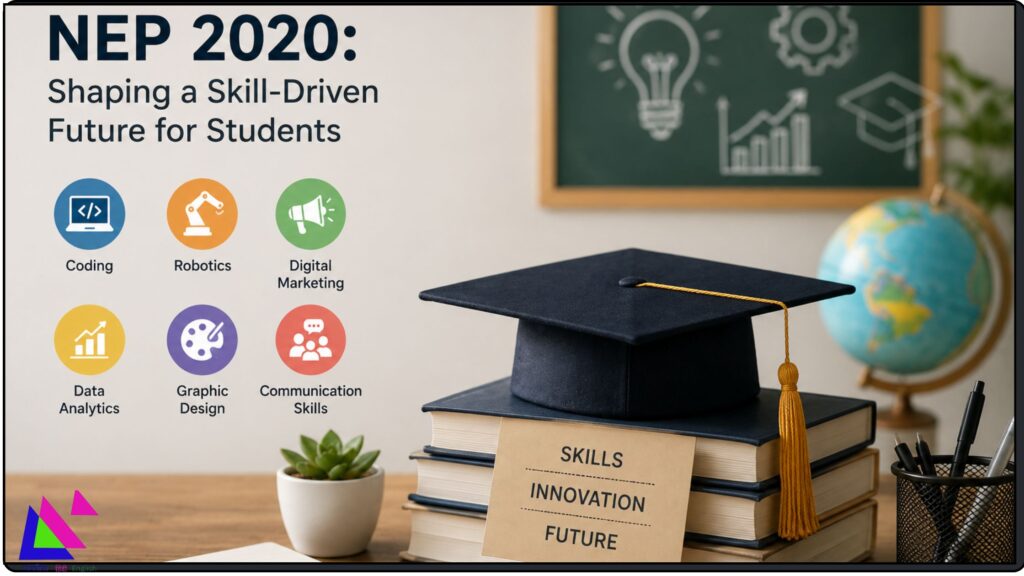
Popular skill-based fields include:
- Coding and Artificial Intelligence.
- Robotics and Automation.
- Digital Marketing.
- Financial Literacy.
- Entrepreneurship.
- Graphic Designing.
- Communication and Soft Skills.
- Data Analytics and Cybersecurity.
Students are also increasingly enrolling in short-term certification programs and micro-credential courses.
Why Skill-Based Learning Is Important
The job market is changing rapidly due to technology, automation, and digital transformation. Many traditional jobs are disappearing, while new career opportunities are emerging.
Skill-based education is important because it:
- Makes students job-ready.
- Improves employability.
- Encourages innovation and creativity.
- Reduces dependence on rote learning.
- Supports entrepreneurship and startups.
- Helps students adapt to future technologies.
This approach bridges the gap between classroom education and industry requirements.
Role of NEP 2020
NEP 2020 promotes practical and flexible learning from an early stage.
Key initiatives under NEP 2020:
- Vocational education in schools.
- Internship and hands-on learning opportunities.
- Flexible subject choices.
- Digital and online learning platforms.
- Industry-oriented certification programs.
- Focus on critical thinking and innovation.
The policy aims to create a future-ready workforce for India.
Advantages of Skill-Based Education
Major advantages include:
- Better career opportunities.
- Increased confidence and independence.
- Practical understanding of subjects.
- Improved problem-solving abilities.
- Faster adaptation to industry changes.
- Encouragement for innovation and startups.
- Stronger entrepreneurial mindset.
Students become more capable of handling real-world challenges.
Challenges in Implementation
Although the idea is highly beneficial, implementation remains challenging in many areas.
Common challenges include:
- Lack of trained teachers.
- Limited digital infrastructure.
- Unequal access in rural regions.
- Outdated teaching methods.
- Financial limitations in institutions.
- Need for regular curriculum updates.
Proper planning and investment are necessary for successful implementation.
Future Impact
Skill-based education can transform India into a stronger and more self-reliant economy.
Future benefits may include:
- Creation of a skilled workforce.
- Higher employment opportunities.
- Growth in startups and innovation.
- Better global competitiveness.
- Increased youth entrepreneurship.
This model can help India meet future economic and technological demands.
Conclusion
The rise of skill-based education under NEP 2020 represents a major transformation in India’s learning system. By combining academic knowledge with practical learning, the policy is preparing students for future careers, entrepreneurship, and technological advancements.
FAQs
1. What is skill-based education?
Ans: Skill-based education focuses on practical learning and developing abilities that can be directly applied in careers and daily life.
2. Why is skill-based learning important today?
Ans: It helps students become job-ready and prepares them for rapidly changing industries and technologies.
3. What are micro-credentials?
Ans: Micro-credentials are short-term certification programs that help students learn specialized skills in specific fields.
4. How does NEP 2020 support skill development?
Ans: NEP 2020 promotes vocational education, internships, digital learning, and practical skill-based courses.
5. Can skill-based education improve employment opportunities?
Ans: Yes. Students with practical and industry-relevant skills often have better employment and entrepreneurship opportunities.

Hi, I’m Dev Kirtonia, Founder & CEO of Dev Library. A website that provides all SCERT, NCERT 3 to 12, and BA, B.com, B.Sc, and Computer Science with Post Graduate Notes & Suggestions, Novel, eBooks, Biography, Quotes, Study Materials, and more.
Subject Ka Complete Video Solution Dekhein
Step-by-step easy concept explanation aur full questions Answer ke liye watch karein ya app download karein:






 Buy Now