
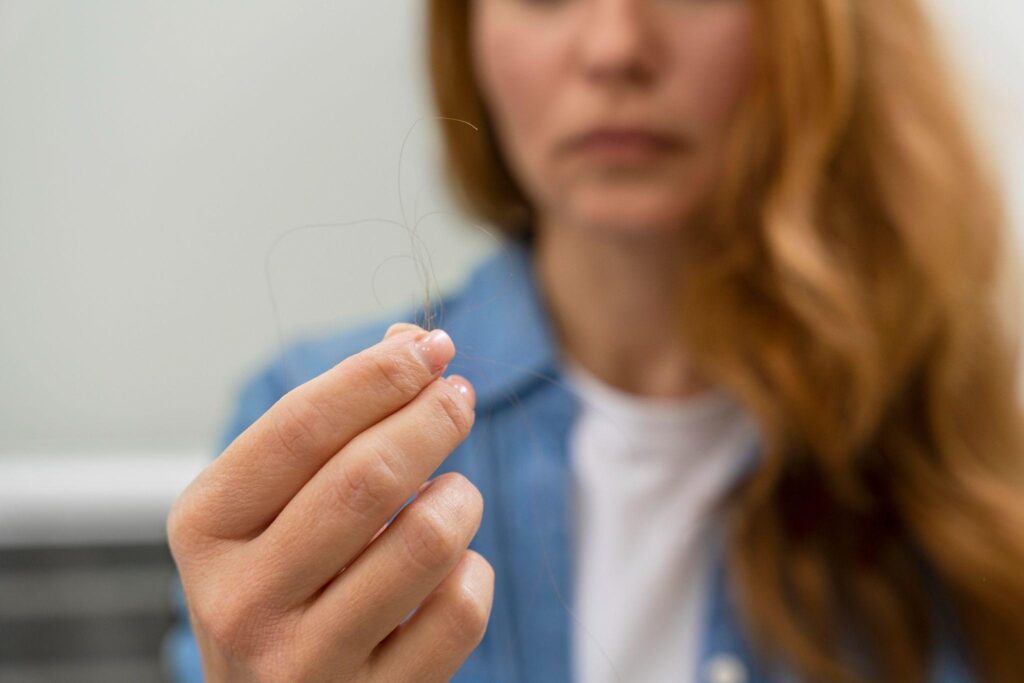
Losing hair when your father and grandfather both went through the same thing can feel inevitable. Many people assume hereditary hair loss is a life sentence — that once it starts, there’s nothing meaningful you can do. That belief, while understandable, isn’t entirely accurate. The science around this condition has moved forward considerably, and so have the approaches to managing it.
What Actually Happens in Hereditary Hair Loss
Hereditary hair loss, clinically called androgenetic alopecia, is driven by a hormone called DHT — dihydrotestosterone. This is a derivative of testosterone, and in people who are genetically sensitive to it, DHT binds to hair follicles and gradually shrinks them. Over time, the hair that grows from these follicles becomes thinner, shorter, and eventually stops growing altogether.
The sensitivity to DHT isn’t something you develop — it’s inherited. This is why the condition runs in families. But the degree of loss, the timing, and how fast it progresses can vary significantly even among people with the same genetic background. So while genes load the gun, other factors often pull the trigger.
Why Early Identification Matters More Than Most People Realise
One of the biggest mistakes people make is waiting until hair loss becomes visible and significant before taking action. By the time you notice clear thinning or a receding hairline, the follicles in that area have likely been miniaturizing for months or even years.
Hair follicles don’t disappear suddenly. They shrink progressively, and there’s a window during which intervention can still preserve function. Once a follicle becomes completely dormant or is replaced by scar tissue, reversal becomes extremely difficult. This is why early detection — through a scalp examination or a health assessment — can genuinely change outcomes.
What Modern Treatment Options Actually Look Like
The conversation around genetic hair loss treatment has evolved well beyond the old “apply this oil and hope for the best” advice. Today’s approaches are more targeted and work on multiple levels:
- Topical treatments like minoxidil work by improving blood flow to the follicle, essentially keeping the growth phase of hair active for longer. They don’t block DHT but compensate for some of its damage.
- DHT-blocking therapies, whether topical or systemic, directly address the root hormonal cause. These have shown strong clinical evidence particularly in male pattern baldness.
- Nutritional support matters more than it’s often given credit for. Deficiencies in iron, zinc, vitamin D, and biotin don’t cause hereditary hair loss, but they can significantly accelerate it in someone who already has the genetic tendency.
- Scalp health — sebum buildup, inflammation, dandruff — can worsen follicle miniaturization. Addressing this is often an overlooked but practical step.
No single approach works in isolation. The most effective results tend to come from combining a few of these, based on what’s actually contributing in each individual case.
The Role of Hormonal and Metabolic Health
Something worth understanding is that hereditary hair loss doesn’t happen in a vacuum. Hormonal imbalances — including thyroid dysfunction, elevated androgens in women, or insulin resistance — can amplify genetic hair loss significantly. Many people who assume their hair loss is “purely genetic” are actually experiencing a combination of factors.
For women especially, the picture is often more complex. Female pattern hair loss can look different from the male version and is more frequently tied to hormonal shifts — puberty, pregnancy, menopause, or conditions like PCOS. This is why treatment that works for one person may not work for another, even within the same family.
How Traya Approaches This Problem
Traya’s model is built around exactly this idea — that hereditary hair loss rarely has a single cause and therefore rarely has a single solution. By combining medical, nutritional, and Ayurvedic inputs, the brand tries to identify what’s specifically driving hair loss for each person rather than offering a one-size-fits-all product.
- Aloe Vera Oil: Uses, and Health Advantages Explained
- Understanding Your Thyroid: Symptoms, Tests & Easy-to-Follow Care
- Bay Leaf Essential Oil
Final Thoughts
Hereditary hair loss is real, and genetics do play a central role. But “genetic” doesn’t mean untreatable or unmanageable. The science supports intervention — especially when it’s early, targeted, and grounded in understanding what’s actually happening in your body. If you’ve been brushing it off as something you simply inherited and have to live with, it may be worth taking a second look. The earlier you understand the mechanism, the more options you have.

Hi, I’m Dev Kirtonia, Founder & CEO of Dev Library. A website that provides all SCERT, NCERT 3 to 12, and BA, B.com, B.Sc, and Computer Science with Post Graduate Notes & Suggestions, Novel, eBooks, Biography, Quotes, Study Materials, and more.
Subject Ka Complete Video Solution Dekhein
Step-by-step easy concept explanation aur full questions Answer ke liye watch karein ya app download karein:



 Buy Now