
Drug Free Campuses: Centre’s New Plan to Promote Student Wellness in Colleges
Drug Free Campuses are at the centre of the Government’s latest proposal to create safer and healthier learning environments across educational institutions in India. Under the Vision Document on Narcotics Control (2026–2029), the Central Government has proposed the Drug-Free Campuses initiative to promote student wellness, awareness, counselling, and preventive measures that support healthier campus communities.
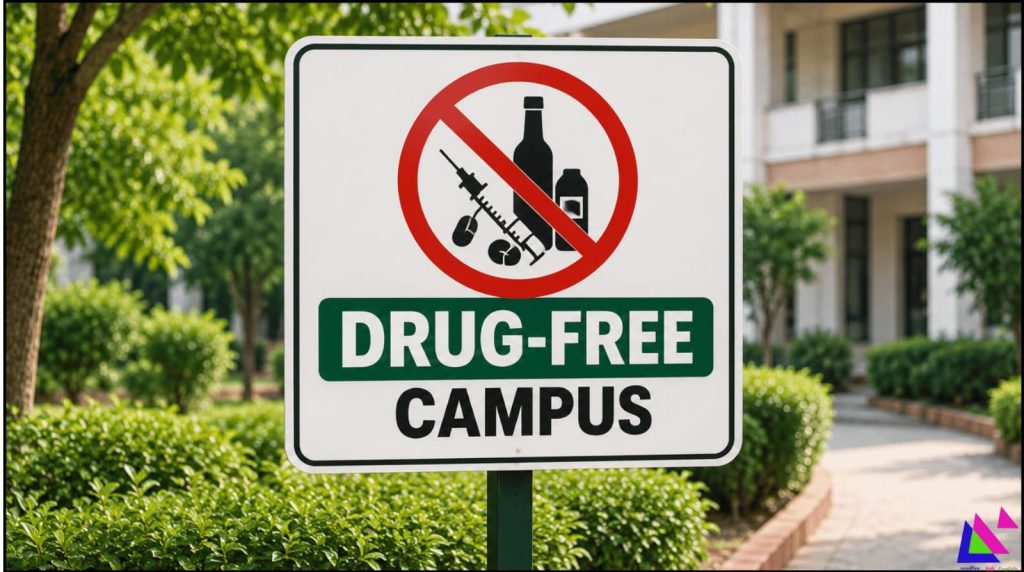
Rather than concentrating only on enforcement, the proposal encourages colleges and universities to strengthen student support systems through awareness programmes, wellness activities, counselling services, and collaboration with parents and healthcare professionals. The overall aim is to ensure that students have access to a positive academic environment where they can focus on their education and personal development.
What is the Drug Free Campuses Initiative?
The Drug Free Campuses initiative is a proposed national programme designed to encourage educational institutions to create safer, healthier, and more supportive campuses. It will mainly cover Centrally Funded Higher Educational Institutions (CFHEIs) and recommends several student-focused measures that promote awareness and overall well-being.
One of the major proposals is the creation of a 500-metre Drug-Free Zone around educational institutions. The idea is to strengthen the surroundings of campuses so that students can study in a secure and positive environment.
Read Also: Anti-Drug Drive: Assam Launches Major School Campaign, Flags Drone-Aided Drug Threat
Key Highlights
- Initiative: Drug Free Campuses
- Proposed Under: Vision Document on Narcotics Control (2026–2029)
- Coverage: Centrally Funded Higher Educational Institutions (CFHEIs)
- Special Provision: 500-metre Drug-Free Zone around educational institutions
- Student Wellness: Consent-based drug screening
- Objective: Promote safe, healthy, and supportive campuses
Consent-Based Student Screening
The Vision Document also recommends consent-based drug screening as part of student wellness programmes in Centrally Funded Higher Educational Institutions.
Key points include:
- Screening will be consent-based.
- It will be conducted as part of student wellness programmes.
- The focus is on early support and counselling, not punishment.
- Student privacy and dignity are expected to be respected during the process.
Awareness and Student Well-being
The initiative gives equal importance to awareness and prevention through educational activities.
Educational institutions may organise:
- Awareness campaigns
- Workshops and seminars
- Counselling sessions
- Wellness programmes
- Student-led awareness activities
These programmes aim to encourage informed decisions and healthy lifestyle choices among students.
Role of Educational Institutions
Colleges and universities will be encouraged to:
- Strengthen counselling services.
- Appoint nodal officers or wellness coordinators.
- Conduct regular awareness programmes.
- Work with parents, healthcare professionals, and local authorities.
- Promote a healthy and supportive campus environment.
Expected Outcomes
The proposed initiative is expected to:
- Create safer campuses across India.
- Strengthen student wellness programmes.
- Increase awareness among students.
- Improve access to counselling and guidance.
- Promote healthy lifestyle choices.
- Encourage greater collaboration between educational institutions and government agencies.
Expected Benefits
If implemented, the Drug Free Campuses initiative could bring several positive outcomes for students and educational institutions.
Some expected benefits include:
- Safer and healthier learning environments.
- Better access to student counselling services.
- Increased awareness about health and wellness.
- Stronger student support systems.
- Improved collaboration between institutions and community stakeholders.
- Encouragement of healthy lifestyle choices among students.
- Greater focus on overall student development and well-being.
Conclusion
The proposed Drug Free Campuses initiative under the Vision Document on Narcotics Control (2026–2029) reflects the Centre’s focus on strengthening student well-being and campus safety. By creating a 500-metre Drug Free Zone, introducing consent-based screening in student wellness programmes, and promoting awareness and counselling, the initiative aims to build healthier and more supportive educational environments across the country.
FAQs
1. What is the Drug-Free Campuses initiative?
Ans: It is a government proposal to create safer and healthier campuses across India.
2. What is the 500-metre Drug-Free Zone?
Ans: It is a proposed safety zone extending 500 metres around educational institutions.
3. What is consent-based drug screening?
Ans: It is a voluntary screening conducted with a student’s consent as part of wellness programmes.
4. Which institutions are covered?
Ans: The proposal applies to Centrally Funded Higher Educational Institutions (CFHEIs).
5. What is the main objective of the initiative?
Ans: To promote student well-being, awareness, and safe campus environments.







 Buy Now