
In modern organizations, decisions are no longer based on intuition alone. Accurate, timely, and well-structured information is essential for planning, controlling, and evaluating business performance. This information is communicated through reporting techniques. Reporting techniques refer to the various methods and tools used to collect, analyze, present, and communicate data in a clear and meaningful manner to management and other stakeholders.
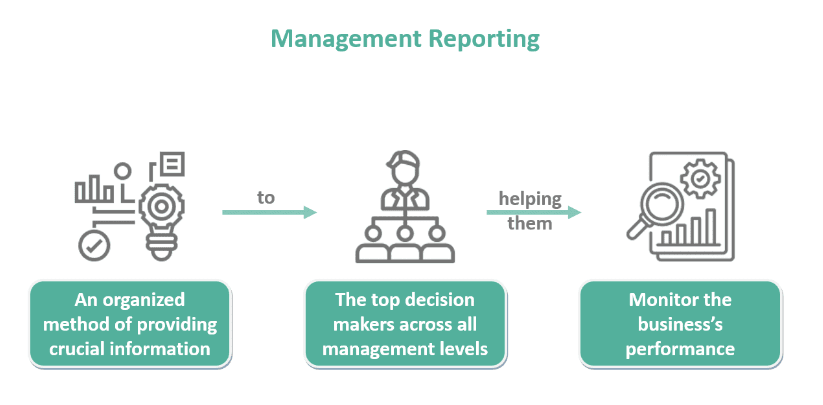
Effective reporting helps management understand the current position of the business, identify problems, evaluate performance, and take corrective actions. With the growth of technology and data-driven management, reporting techniques have evolved from simple written reports to advanced dashboards and visual analytics.
Meaning of Reporting Techniques
Reporting techniques are systematic methods used to present financial and non-financial information in a structured form so that it can be easily understood and used for decision-making.
Reports may be prepared for different purposes, such as:
- Managerial decision-making
- Performance evaluation
- Control and supervision
- Compliance and statutory requirements
The effectiveness of reporting depends not only on the accuracy of data but also on how well the information is presented.
Objectives of Reporting Techniques
The main objectives of reporting techniques are:
- To provide relevant information – Supply useful and timely information to management.
- To support decision-making – Help management choose the best course of action.
- To facilitate control, Enable comparison of actual performance with planned performance.
- To improve communication – Ensure smooth flow of information within the organization.
- To highlight deviations – Draw attention to variances and problem areas.
- To ensure accountability – Fix responsibility for performance at different levels of management.
Importance of Reporting Techniques
Reporting techniques play a vital role in effective management. Their importance can be explained as follows:
- Better planning: Reports provide historical data and trends useful for future planning.
- Effective control: Management can monitor performance and take corrective measures.
- Coordination: Reports help in coordinating the activities of different departments.
- Transparency: Clear reporting enhances trust among stakeholders.
- Performance evaluation: Individual and departmental performance can be measured.
Essentials of a Good Report
For reporting techniques to be effective, reports should possess the following qualities:
- Accuracy and reliability
- Clarity and simplicity
- Relevance and usefulness
- Timeliness
- Comparability
- Consistency
- Conciseness
A good report presents the right information to the right person, at the right time.
Types of Reporting Techniques
Reporting techniques can be classified into various categories based on purpose, content, and presentation style.
1. Written Reporting Techniques
(a) Routine Reports
Routine reports are prepared at regular intervals, such as daily, weekly, monthly, or annually.
Examples:
- Daily production reports
- Monthly sales reports
- Annual financial reports
These reports help management track regular operations.
(b) Special Reports
Special reports are prepared to meet specific requirements or to study a particular issue.
Examples:
- Feasibility reports
- Investigation reports
- Cost reduction reports
They are usually non-recurring in nature
(c) Statutory Reports
Statutory reports are prepared to comply with legal requirements.
Examples:
- Annual financial statements
- Tax reports
- Audit reports
These reports ensure legal compliance and transparency.
2. Oral Reporting Techniques
Oral reporting involves face-to-face communication, meetings, or presentations.
Advantages:
- Immediate feedback
- Clarification of doubts
- Personal interaction
Limitations:
- Lack of permanent record
- Risk of misinterpretation
Oral reports are suitable for urgent matters and discussions.
3. Statistical Reporting Techniques
Statistical techniques help in summarizing large volumes of data in numerical form.
(a) Tables
Tables present data in rows and columns, making comparison easy.
(b) Percentages and Ratios
Percentages and ratios help in understanding relationships between figures.
Examples:
- Profit margin
- Current ratio
- Inventory turnover ratio
These techniques simplify complex data.
4. Graphical Reporting Techniques
Graphical techniques present information visually, making it easier to understand at a glance.
(a) Bar Charts
Used for comparing different sets of data, such as sales of different products.
(b) Line Graphs
Used to show trends over time, such as sales growth or profit trends.
(c) Pie Charts
Used to show the composition or proportion of a whole.
(d) Histograms and Area Charts
Used for frequency distribution and trend analysis.
Graphical reports are highly effective for top management.
5. Diagrammatic Reporting Techniques
Diagrams use symbols, shapes, and illustrations to represent data.
Examples:
- Flow charts
- Organization charts
- Process diagrams
These techniques explain processes and relationships clearly.
6. Management Reporting Techniques
Management reporting techniques focus on providing information for planning, control, and decision-making.
(a) Budgetary Reports
These reports compare actual performance with budgeted figures.
Examples:
- Cash budget reports
- Production budget reports
They help in cost control and financial discipline.
(b) Standard Costing and Variance Reports
These reports analyze differences between standard costs and actual costs.
Types of variances:
- Cost variance
- Material variance
- Labour variance
They highlight inefficiencies and responsibility.
(c) Responsibility Accounting Reports
These reports are prepared for different responsibility centers such as cost centers, profit centers, and investment centers.
They ensure accountability at various management levels.
7. Performance Reporting Techniques
Performance reporting techniques measure efficiency and effectiveness.
(a) Key Performance Indicators (KPIs)
KPIs are measurable values that indicate how well an organization is achieving its objectives.
Examples:
- Return on investment (ROI)
- Sales growth rate
- Customer satisfaction level
(b) Balanced Scorecard
The balanced scorecard measures performance from multiple perspectives:
- Financial
- Customer
- Internal processes
- Learning and growth
It provides a holistic view of organizational performance.
8. Modern Reporting Techniques
With advancements in technology, reporting techniques have become more sophisticated.
(a) Dashboards
Dashboards provide real-time information using charts, graphs, and indicators on a single screen.
(b) MIS Reports
Management Information System (MIS) reports integrate data from different departments for comprehensive analysis.
(c) Data Visualization Tools
Advanced software tools transform complex data into interactive visual reports.
These techniques improve the speed, accuracy, and effectiveness of reporting.
Limitations of Reporting Techniques
Despite their advantages, reporting techniques have certain limitations:
- Dependence on the accuracy of data
- Risk of information overload
- Time-consuming preparation
- Possibility of misinterpretation
- Cost of advanced reporting systems
Proper design and control can reduce these limitations.
Role of Reporting Techniques in Decision-Making
Reporting techniques support managerial decision-making by:
- Providing factual data
- Identifying trends and patterns
- Highlighting deviations
- Evaluating alternatives
- Reducing uncertainty
Good reports turn raw data into actionable information.
Conclusion
Reporting techniques are an indispensable part of modern management and accounting systems. They bridge the gap between data and decision-making by presenting information in a structured, meaningful, and understandable form. From traditional written reports to advanced dashboards and performance metrics, reporting techniques enable management to plan effectively, control operations, and evaluate performance.
In an increasingly competitive and data-driven business environment, organizations that adopt effective reporting techniques gain better control, transparency, and strategic advantage. Therefore, a sound reporting system is not merely a communication tool but a powerful instrument for achieving organizational goals.

Hi, I’m Dev Kirtonia, Founder & CEO of Dev Library. A website that provides all SCERT, NCERT 3 to 12, and BA, B.com, B.Sc, and Computer Science with Post Graduate Notes & Suggestions, Novel, eBooks, Biography, Quotes, Study Materials, and more.
Subject Ka Complete Video Solution Dekhein
Step-by-step easy concept explanation aur full questions Answer ke liye watch karein ya app download karein:




 Buy Now