
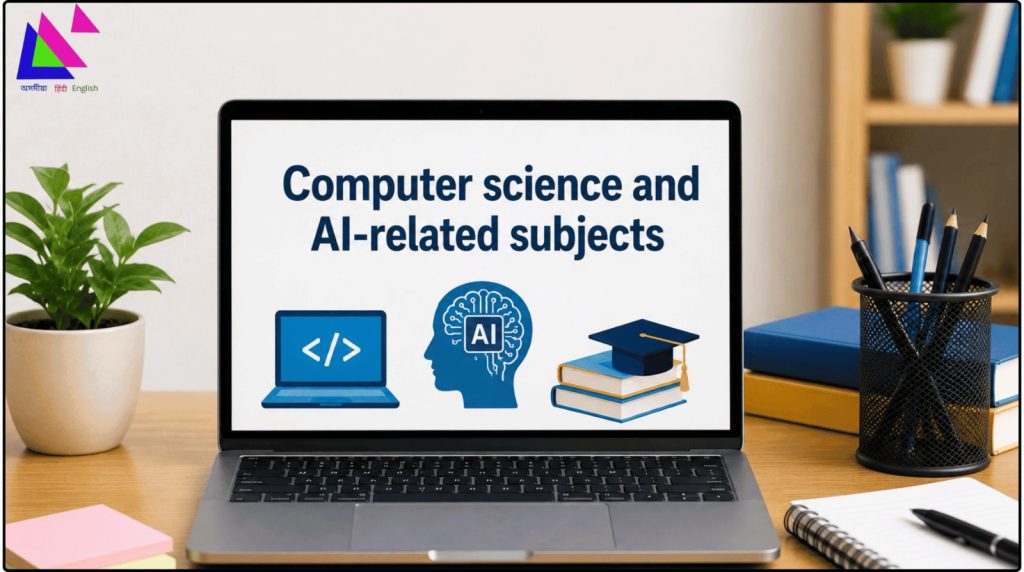
Computer Science and AI-related subjects are becoming increasingly popular among students as artificial intelligence continues to transform education and career opportunities. The growing AI boom is encouraging students from commerce, humanities and social science backgrounds to explore coding, data skills, AI tools and digital technologies. This shift shows that students are preparing themselves for the changing world of work.
Why Are Students Choosing AI-Related Courses?
Students see technology skills as useful across many careers. Businesses, schools, banks, media organisations and other workplaces use digital tools to manage information, improve services and understand data. Students therefore view computer science and AI-related subjects as useful additions to their education. Online learning has also made it easier for beginners to explore these areas before choosing a full-time programme.
Key reasons include:
- Growing demand for digital skills.
- More online learning opportunities.
- Wider use of technology across industries.
- Flexible courses for beginners.
A New Interest Among Non-Technical Students
The biggest change is that students do not always need a traditional technology background to explore AI. Commerce students can combine finance with data skills, while humanities students can explore areas such as digital communication, AI ethics and technology policy. Education students can also learn how digital tools can support teaching and classroom learning.
This makes computer science and AI-related subjects more attractive because students can connect technology with subjects they already understand.
For example:
- Commerce students can explore finance and data analytics.
- Humanities students can explore digital communication and technology policy.
- Education students can learn about digital learning tools.
- Business students can explore automation and data-driven decision-making.
Universities Are Responding to Student Demand
Higher education institutions are also changing their programmes to match this growing interest. Many universities now combine AI with business, science, design, education and other disciplines. These interdisciplinary courses can help students understand technology while keeping their original subject knowledge.
Project-based learning can help students understand how computer science and AI-related subjects apply outside the classroom. Practical assignments can also help learners build problem-solving, teamwork, communication and research skills. This approach can make learning more connected to real workplace situations.
AI Skills Can Support Different Careers
Students do not need to become software developers to benefit from AI knowledge. Basic AI concepts, digital tools and data skills can support many professional roles. A student may use these skills in marketing, finance, education, research, communication or business without making technology their only area of study.
Communication, creativity, critical thinking and subject knowledge remain important. Students can combine these skills with computer science and AI-related subjects for a balanced learning path. This combination can help them understand both the technology and the needs of the field in which they want to work.
What Should Students Keep in Mind?
Students should choose courses based on their interests and career plans rather than simply following a popular trend. They should check requirements, course content, teaching methods and practical opportunities before making a decision.
Before choosing a course, students should check:
- Eligibility and admission requirements.
- Course subjects and practical projects.
- Career options after completion.
- Opportunities to build additional skills.
- Whether the course matches their existing interests.
Technology changes quickly, so students who choose computer science and AI-related subjects should keep learning and build adaptable skills. They should also follow developments in their chosen field and practise using new tools responsibly. A strong foundation can help students adjust as technology continues to develop.
Conclusion
The AI boom is reshaping higher education and widening interest in technology. The growing interest in computer science and AI-related subjects shows that students want to combine existing knowledge with modern digital skills. Universities are responding with more interdisciplinary learning options and practical courses. As this trend continues, students may find more opportunities to connect technology with their chosen fields. A balanced approach can help them develop useful digital skills without losing the value of communication, creativity, critical thinking and subject knowledge.
FAQs
1. Can non-technical students study AI?
Ans: Yes, depending on the course requirements.
2. Do students need coding knowledge to start learning AI?
Ans: Not always. Beginners can start with basic concepts.
3. Why are students interested in computer science and AI-related subjects?
Ans: They can complement existing education and support different career paths.
4. Should students choose an AI course only because it is popular?
Ans: No. They should consider their interests and career goals first.
5. Why are students choosing Computer Science and AI-related subjects?
Ans: Students are choosing these subjects to develop coding, data, AI and digital skills that can support future study and career opportunities.

Hi, I’m Dev Kirtonia, Founder & CEO of Dev Library. A website that provides all SCERT, NCERT 3 to 12, and BA, B.com, B.Sc, and Computer Science with Post Graduate Notes & Suggestions, Novel, eBooks, Biography, Quotes, Study Materials, and more.





 Buy Now