
Most people judge a betting app by how fast it opens or how smooth the odds look during a live match. Fair enough. But what really matters sits far below the interface. Architecture. The unglamorous part no one markets, yet everyone depends on.
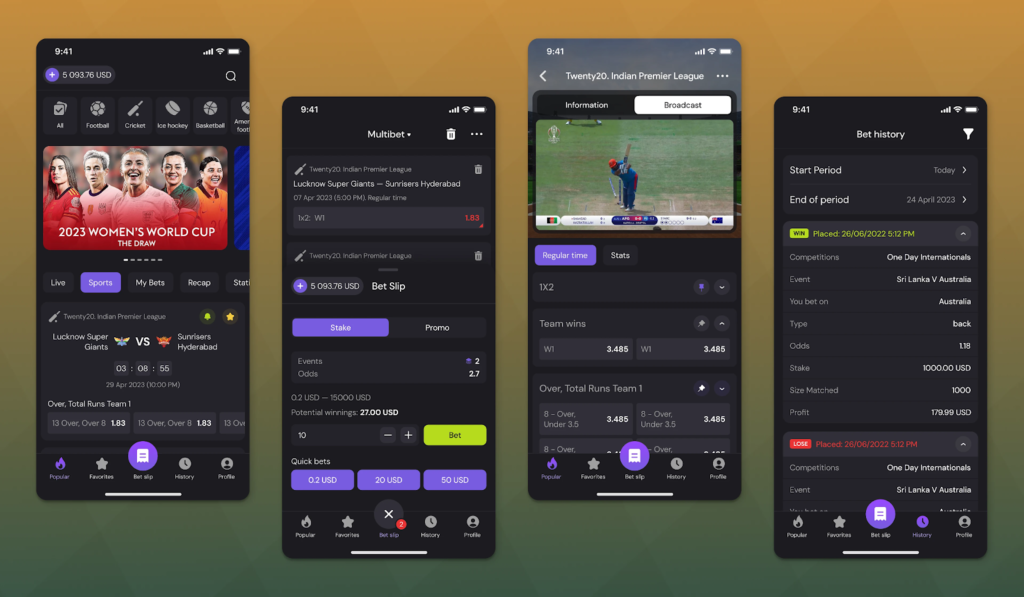


Spend any time around product or engineering teams and you’ll hear the same quiet fear: traffic spikes. A big game, a late goal, a sudden shift in odds. Thousands of users jump in at once. When someone taps into a parimatch betting app at that exact moment, the system has zero room for hesitation.
Stability isn’t a feature, it’s a baseline
In betting, stability isn’t something you add later. If the app crashes once during a key event, users remember. They don’t forgive. They screenshot, complain, uninstall.
That’s why modern betting apps are designed to absorb stress by default. Redundancy everywhere. No single point of failure. If one service goes down, the rest keep breathing. It’s not about being perfect. It’s about failing quietly.
Why modular systems won
Monoliths worked when betting was slower. Pre-match bets, predictable traffic, fewer markets. That era is gone.
Today’s platforms are split into focused services. Odds engines live on their own. User accounts somewhere else. Payments isolated for obvious reasons. Live data feeds handled separately, because they behave differently under load. This setup isn’t trendy. It’s defensive. When one piece struggles, it doesn’t drag the whole app down with it.
Real-time pressure changes everything
Live betting rewrote the rules. Odds update constantly. Feeds stream nonstop. Users refresh obsessively. Any delay creates risk financial, legal, reputational.
To survive that, modern architecture relies on event-driven flows, heavy caching, and aggressive performance monitoring. Data moves in streams, not requests. Systems react instead of waiting. Latency isn’t measured in seconds here. It’s felt instantly.
Scaling without announcing it
The best scaling is invisible. When traffic doubles or triples, users shouldn’t feel a thing. No slowdowns. No weird logouts. No frozen cashout buttons.
Cloud infrastructure made this possible, but only if used properly. Auto-scaling, regional distribution, load balancing all tuned for worst-case scenarios, not average days.Because in betting, average days don’t matter. Peak moments do.
Security woven into the structure
Security in betting apps isn’t a layer you add on top. It’s part of the skeleton. Every service assumes hostile behavior. Not paranoia. Just experience. Fraud attempts, automated abuse, odd betting patterns they happen constantly.
So authentication, session control, transaction monitoring, and logging are spread across the system. Nothing trusts blindly. Everything verifies. This slows nothing down when done right. It just keeps things from exploding.
Why users never notice any of this
And that’s the goal. Good architecture feels boring. Predictable. Quiet. Users place bets, watch games, withdraw money. They don’t think about servers, services, or failover zones.
But when architecture is weak, users suddenly become experts. They notice every glitch. Every delay. Every error message. Modern betting apps are built to avoid that moment. Stability first. Scaling always. Everything else is secondary. If users never talk about your architecture, you probably built it right.

Hi, I’m Dev Kirtonia, Founder & CEO of Dev Library. A website that provides all SCERT, NCERT 3 to 12, and BA, B.com, B.Sc, and Computer Science with Post Graduate Notes & Suggestions, Novel, eBooks, Biography, Quotes, Study Materials, and more.



 Buy Now
