
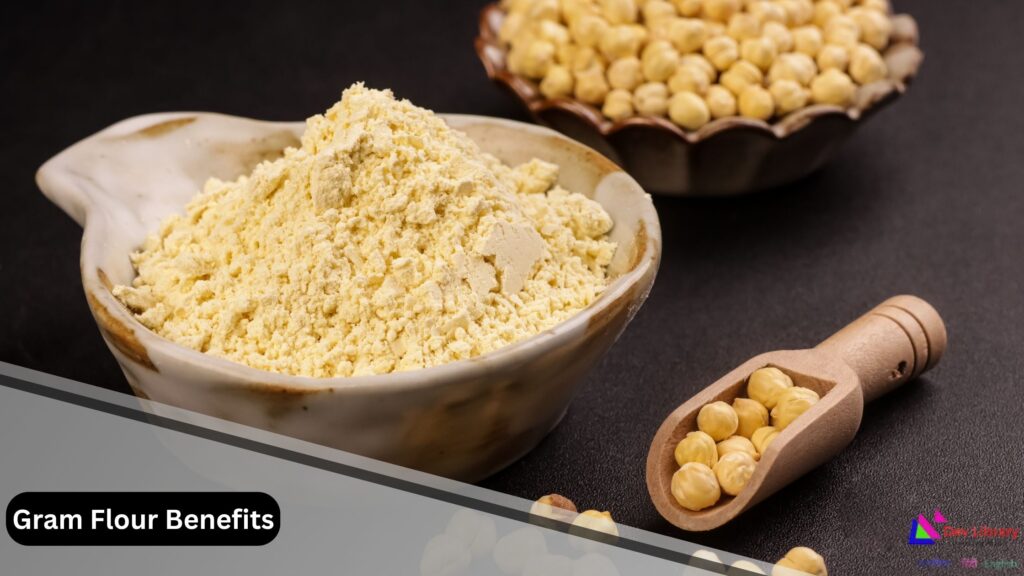
Gram flour—also known as besan, chickpea flour, or garbanzo flour—is a finely ground powder made from dried chickpeas. It’s a staple in kitchens worldwide, loved for fritters, batters, sweets, and even as a natural skin-care ingredient. Thanks to its protein, fiber, vitamins, and minerals, gram flour offers several potential health benefits when used sensibly in food and topical home remedies.
What Is Gram Flour?
Traditionally, dried chickpeas are roasted lightly and ground to a fine flour. The result is a versatile ingredient that can be used to thicken gravies, bind snacks, bake gluten-free recipes, and create nourishing face and body packs.
Gram Flour (Besan): Benefits —
| Benefit | How it helps | How to use |
| Blood-sugar control | Fiber + protein slow glucose spikes | Cheela, kadhi, pancakes; pair with veggies/yogurt |
| Satiety & steady energy | Keeps you fuller, longer | Breakfast besan omelette with veggies |
| Heart/cholesterol | Fiber may lower LDL | Prefer baking/air-frying over deep-frying |
| Iron support | Contributes to RBC formation | Add lemon/tomato (vitamin C) with besan dishes |
| BP support | Magnesium aids vascular health | Rotate into main meals 2–3×/week |
| Bone support | Phosphorus + magnesium help bones | Mix besan with whole-grain flours |
| Pregnancy nutrition | High folate supports fetal development | Use in balanced meals (follow doctor’s advice) |
| Gut/colon health | Prebiotic fiber feeds good bacteria | Thicken soups/curries; increase fiber gradually |
| Skin cleansing | Removes oil/impurities | Topical: besan + yogurt/milk (15–20 min) |
| Gentle exfoliation/brightening | Lifts dead skin; reduces tan look | Topical: besan + turmeric + rose water |
Health Benefits of Besan
- Supports blood-sugar control: Pulses, including chickpeas, generally have a lower glycaemic impact than many refined flours. Their fiber content slows digestion and may help reduce post-meal blood-sugar spikes—useful for people managing blood sugar as part of an overall diet plan.
- Helps maintain healthy iron levels: Besan contains iron, which contributes to normal red blood cell formation. Regular dietary sources of iron can help reduce the risk of iron-deficiency anemia when combined with a balanced diet.
- Colon health: The resistant starches and fibers in chickpea flour feed beneficial gut bacteria. This can support overall colon health and may help reduce certain risk factors associated with colon problems.
- Steady energy & satiety: High protein plus fiber = slower digestion, steadier energy, and longer fullness—potentially helpful in weight-management strategies.
Additional Benefits
- Immune & metabolic support: Nutrients such as vitamin B6, zinc, magnesium, and folate play roles in immunity, nerve function, and normal metabolism.
- Heart-friendly profile: Natural unsaturated fats and fiber can support healthy cholesterol levels when besan replaces more refined or saturated-fat-rich ingredients in recipes.
- Bone health: Phosphorus and magnesium work with calcium in the body to contribute to normal bone maintenance.
- Pregnancy nutrition: Folate (B9) supports normal development of the fetal brain and spine. (Pregnant individuals should follow their clinician’s guidance for total folate intake.)
- Nervous system, mood & appetite: B-vitamins (including B1 and B6) support energy metabolism and neurotransmitter synthesis, which are involved in mood and appetite regulation.
Popular Culinary Uses
- Batters & fritters: pakoras, chilla/cheela, bhajis
- Binding agent: kebabs, patties, cutlets
- Baking & gluten-free cooking: breads, pancakes, crepes
- Thickener: soups, curries, kadhi
- Sweets: besan ladoo, burfi, mysore pak
Tips: Roast lightly for a nuttier flavor; pair with yogurt/curd, lemon, or veggies for balanced meals.
Topical (Skin-Care) Uses
Exfoliating scrub:
3 tbsp besan + a pinch of turmeric + 1 tbsp rice powder; add rose water to make a paste (add ½ tbsp honey for dry skin). Apply, let dry, then gently rub off before bathing.
For oily skin/cleansing pores:
Equal parts besan, yogurt, and raw milk. Apply for ~20 minutes and rinse.
Tan/mark reduction pack:
4 tsp besan + 1 tsp lemon juice + curd + a pinch of salt; apply on face/neck, let dry, rinse with cool water.
Patch-test first. Discontinue if irritation occurs.
Potential Side-Effects & Precautions
Digestive discomfort: Some people may experience bloating or indigestion, especially if besan is undercooked or eaten in large amounts.
Deep-fried preparations: Fritters are delicious but can be high in fat and calories; prefer baking, air-frying, or shallow-frying when possible.
Allergies: If you’re allergic to chickpeas/legumes, avoid besan. Topical use can trigger redness or rashes in sensitive skin—always patch-test.
General advice: Traditional beliefs suggest avoiding excess “heat-forming” foods in hot months; listen to your body and maintain overall dietary balance.
Medical note: The information above is general and educational. If you have health conditions (e.g., diabetes, celiac disease, allergies, pregnancy), consult a qualified healthcare professional for personalized guidance.
Conclusion
Gram flour is a nutrient-dense, kitchen-friendly staple: high in protein and fiber, naturally gluten-free, and versatile in both cooking and skin care. Used in sensible amounts—and cooked well—it can support balanced meals, steady energy, and everyday wellness.
FAQ
1. Is gram flour bad for your health?
Ans: No. In moderate portions and when properly cooked, besan can be part of a healthy diet. Deep-fried dishes raise fat and calories, and undercooked besan can cause bloating in some people.
2. Is gram flour good for skin?
Ans: Yes. As a gentle cleanser/exfoliant, it can help remove excess oil and surface impurities, leaving skin smooth. Always patch-test first.
3. Does gram flour lighten skin tone?
Ans: Besan doesn’t “bleach” the skin, but regular use in packs can help lift tan, polish away dead cells, and visibly brighten the complexion.
4. Is gram flour good for high blood pressure?
Ans: It provides magnesium, which supports normal vascular function. Blood pressure management, however, depends on overall diet, lifestyle, and medical care.
5. How do I know if gram flour has gone bad?
Ans: Smell it. Rancid or sour odors indicate spoilage. Also check for clumps, discoloration, or pests. Store in an airtight container in a cool, dry place.

Hi, I’m Dev Kirtonia, Founder & CEO of Dev Library. A website that provides all SCERT, NCERT 3 to 12, and BA, B.com, B.Sc, and Computer Science with Post Graduate Notes & Suggestions, Novel, eBooks, Biography, Quotes, Study Materials, and more.
Subject Ka Complete Video Solution Dekhein
Step-by-step easy concept explanation aur full questions Answer ke liye watch karein ya app download karein:







 Buy Now