
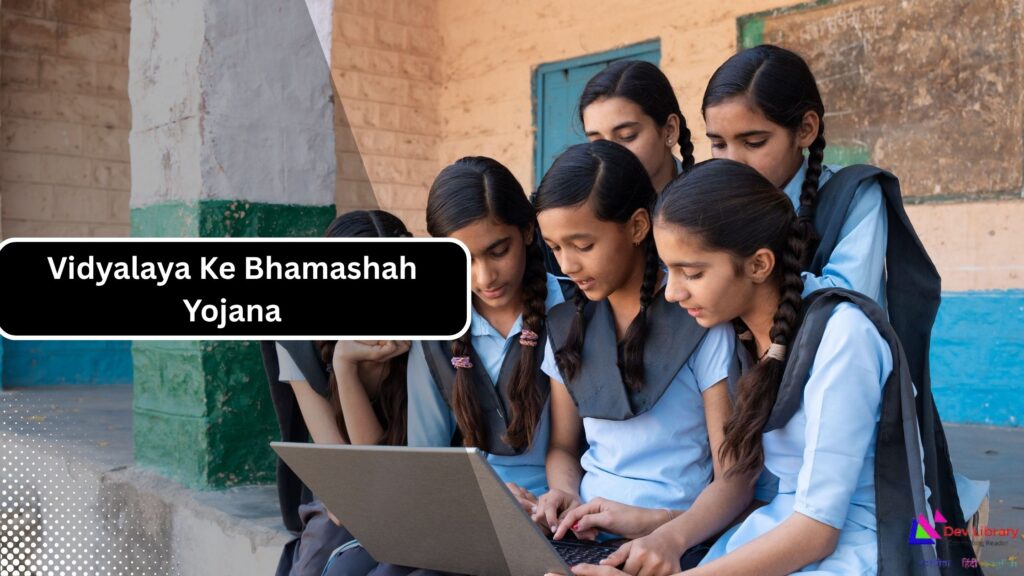
The Bhamashah Yojana 2025 is an initiative of the State Government of Rajasthan, through its School Education Department based in Jaipur, to engage private donors in improving the infrastructure of government schools. The scheme formally enables the adoption of government schools by donors with clearly defined tasks, timelines and accountability standards.
Key Features of Bhamashah Yojana Scheme
- Adoption: Donors (individuals/organisations) can adopt government schools and commit to infrastructure upgrades, including non-recurring and recurring expenses.
- Timeline:
- Naming Rights: Schools may be renamed after donors or their family members, but names can only be retained if upgradation targets are met within three years; otherwise, naming rights shift to another donor.
- Year 1 (Non-recurring): Furniture, smart boards, toilets for boys & girls, drinking water, etc.
- Years 2–5 (Recurring): Cleaning, sports materials, computer maintenance, electricity, water, and minor repairs.
- Accountability: Adoption is revoked if no work starts within six months. Progress is monitored for transparency.
Objectives / Rationale
- Improve the physical infrastructure of government schools: furniture, smart classrooms, sanitation, drinking water etc.
- Establish a sustainable model of school maintenance by linking recurring expenditure to donor commitment over five years.
- Encourage private philanthropic participation in school education infrastructure in Rajasthan, thereby bridging fiscal/operational gaps.
- Enhance accountability and transparency in how donations for school infrastructure are used and implemented.
- Incentivise donors via recognition (school renaming) while tying it to fulfilment of commitments, thereby motivating results.
- Support the broader goal of the state and central government – ensuring every school becomes a “good school” in terms of infrastructure and learning environment.
Implementation Process – Step-by-Step
- Donor identifies a government school willing to be adopted (or school is offered for adoption by department).
- An adoption agreement is signed between the donor and the government school/department, specifying scope of work, timeline, non-recurring & recurring responsibilities, renaming (if any).
- First-year non-recurring work is to be initiated and completed—furniture, smart boards, separate toilets, drinking water etc.
- Within six months of adoption the initial work must commence or risk cancellation of adoption.
- Over the next years (up to year 5) the donor supports recurring costs—cleaning, sports, computer services, minor repairs, utilities, etc.
Expected Benefits
- Enhanced learning environment: better classrooms, smart boards, improved sanitation and drinking water contribute to student wellbeing and learning.
- Sustained maintenance of infrastructure: recurring expenditure component ensures the school does not fall into disrepair soon after upgrade.
- Mobilisation of private funds and social capital for public education, reducing sole dependence on government budgets.
- Stronger public-private synergy in education infrastructure with oversight and monitoring.
- Improved community engagement: donors become stakeholders in school improvement, potentially leading to further civic support and local involvement.
- Potential recognition for donors via school renaming or branding helps incentivise contribution.
Key Conditions & Cautions
- If a donor fails to initiate work within six months, adoption can be revoked.
- Naming rights are contingent — if obligations not met within three years, name can be changed.
- Donors must plan both initial upgrade and recurring maintenance for up to five years; one-time donation is not sufficient for full engagement.
- Schools must comply with documentation, monitoring and transparency norms; department must monitor performance and ensure no misuse of funds.
- Recurring costs must be budgeted realistically by donor; unplanned commitments may lead to dropoff.
- The infrastructure upgrades should align with state norms and school’s actual requirement, to ensure appropriate use and benefit.
Conclusion
The Vidyalaya Ke Bhamashah Yojana 2025 presents a structured, incentive-based pathway for private donors to meaningfully contribute to government school infrastructure in Rajasthan. By combining initial upgrades and a five-year recurring support model, and by linking recognition (naming rights) to performance, the policy seeks to ensure that philanthropic support leads to tangible, sustained improvement in schools. The success of the scheme will depend on rigorous monitoring, equitable implementation and sustained donor commitment.
FAQs
1. Can any individual or organisation adopt a school under this scheme?
Ans: Yes — individuals, industrial institutions, philanthropic organisations can participate by adopting a government school and signing an agreement under the policy.
2. What infrastructure upgrades are required in the first year?
Ans: Basic non-recurring items include: furniture for classrooms, smart boards, separate toilets/urinals for boys & girls including sanitation facilities, clean drinking water facility.
3. What constitutes recurring expenditure in subsequent years?
Ans: Maintenance of cleaning, sports resources, computer services, electricity/water bills, minor repairs, upkeep of infrastructure over up to five years.
4. What happens if the donor doesn’t begin the work within six months?
Ans: The adoption agreement can be cancelled and the donor’s name may be removed; the school may be re-adopted by another donor.
5. Are donors allowed to rename the school?
Ans: Yes — the policy allows schools to be renamed in donor’s or donor’s family member’s name, provided upgrade obligations are fulfilled within three years. Failure may lead to renaming rights being transferred.

Hi, I’m Dev Kirtonia, Founder & CEO of Dev Library. A website that provides all SCERT, NCERT 3 to 12, and BA, B.com, B.Sc, and Computer Science with Post Graduate Notes & Suggestions, Novel, eBooks, Biography, Quotes, Study Materials, and more.
Subject Ka Complete Video Solution Dekhein
Step-by-step easy concept explanation aur full questions Answer ke liye watch karein ya app download karein:






 Buy Now