
Fruits, vegetables, and herbs are rich in essential nutrients that play a vital role in maintaining good health. Since ancient times, Ayurveda has used plant-based remedies to cure diseases. One such nutrient-packed vegetable is Brinjal (Aubergine or Eggplant) — widely cultivated across India, including Assam.
Brinjal is a nutritious and medicinal vegetable that holds a special place in Indian and Asian cuisines. The plant is grown globally for its edible fruit. It helps strengthen bones, boost heart health, and regulate diabetes. Rich in vitamins A, B, and C, as well as folate and minerals such as potassium, magnesium, calcium, and phosphorus, brinjal also provides an excellent source of dietary fiber.
Additional Information
Wild varieties of brinjal are found in Malaysia and India. Solanum incanum, a spiny type of brinjal, grows naturally in the dry hills of West Bengal. Other yellow-fruited types are found in Malaya. Brinjal was first cultivated in India, from where Persians introduced it to Africa, and later Arabs brought it to Spain. From Spain, it spread across Europe and the rest of the world. Today, various types of brinjals thrive in warm regions worldwide.
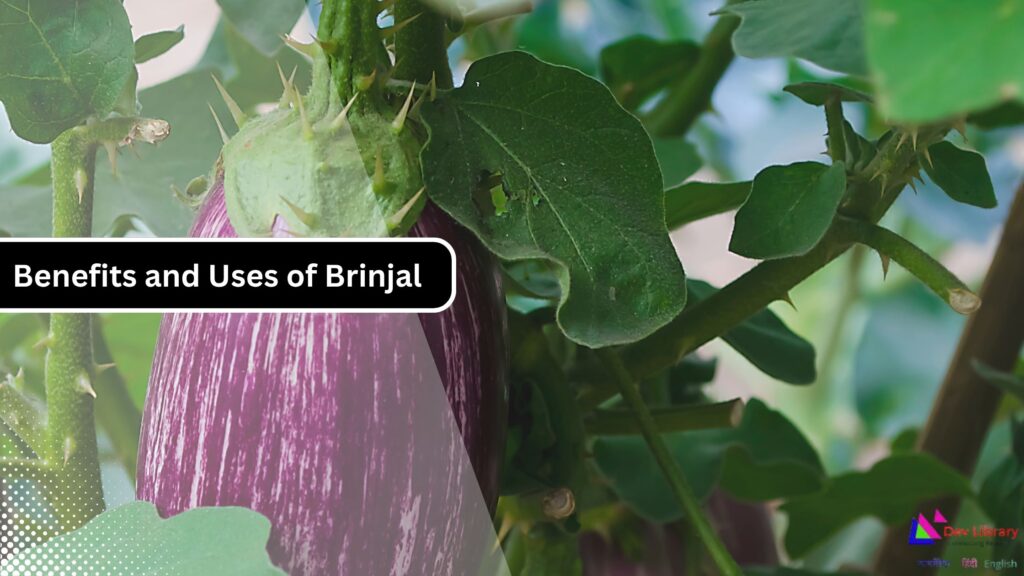
The brinjal plant is generally grown as an annual, upright, bushy plant that sometimes bears spines. Its large, slightly hairy leaves and solitary purple flowers (about 5 cm long) are distinctive. The fruits are oval, glossy, and dark purple but may also appear red, pink, yellow, white, or striped.
Nutritional Value (per 100 g of Brinjal)
| Nutrient | Amount |
| Energy | 104 kJ (25 kcal) |
| Carbohydrates | 5.88 g |
| Sugars | 3.53 g |
| Dietary Fiber | 3 g |
| Fat | 0.18 g |
| Protein | 0.98 g |
| Vitamin B1 (Thiamine) | 0.039 mg |
| Vitamin B2 (Riboflavin) | 0.037 mg |
| Niacin (B3) | 0.649 mg |
| Pantothenic Acid (B5) | 0.281 mg |
| Vitamin B6 | 0.084 mg |
| Folate (B9) | 22 µg |
| Vitamin C | 2.2 mg |
| Vitamin E | 0.3 mg |
| Vitamin K | 3.5 µg |
| Calcium | 9 mg |
| Iron | 0.23 mg |
| Magnesium | 14 mg |
| Manganese | 0.232 mg |
| Phosphorus | 24 mg |
| Potassium | 229 mg |
| Zinc | 0.16 mg |
| Water | 92 g |
Regional Names of Brinjal (Solanum melongena)
| Language | Regional Name |
| Assamese | Bengena |
| Tamil | Kathirikai |
| Malayalam | Vazhuthananga |
| Telugu | Vankaya / San Vankaya |
| Hindi | Baingan / Ringna |
| Bengali | Begun |
| Gujarati | Baingan / Ringna |
| Marathi | Vange |
| Odia | Baigan / Baigana |
| Punjabi | Bataun / Baingan |
| Kashmiri | Waangum |
Scientific Classification
- Kingdom: Plantae
- Clade: Tracheophytes → Angiosperms → Eudicots → Asterids
- Order: Solanales
- Family: Solanaceae
- Genus: Solanum
- Species: S. melongena
- Scientific Name: Solanum melongena
Top 10 Health Benefits
- Promotes Bone Health: The phenolic compounds in brinjal increase bone mineral density and prevent osteoporosis. Calcium and potassium further enhance bone strength and overall skeletal health.
- Improves Brain Function: Rich in phytonutrients, brinjal improves memory, focus, and cognitive ability. Its potassium content acts as a vasodilator, ensuring smooth blood flow to the brain.
- Supports Heart Health: Bioflavonoids help reduce blood pressure and protect the heart. The chlorogenic acid in brinjal acts as a powerful antioxidant that lowers LDL (bad cholesterol).
- Controls Diabetes: Brinjal’s high fiber and low-carbohydrate content help regulate glucose and insulin activity, making it an ideal food for diabetic patients.
- Strengthens Blood Vessels: Vitamin K in brinjal maintains vascular strength and flexibility, helping prevent clots and blockages.
Additional Benefits
- Aids Weight Loss: With low calories and high water and fiber content, brinjal keeps you full longer, boosts metabolism, and limits fat accumulation.
- Enhances Eye Health: Lutein and antioxidants in brinjal protect retinal cells, improve blood flow to the eyes, and prevent macular degeneration and glaucoma.
- Improves Skin Health: Vitamins, minerals, and anthocyanins in brinjal rejuvenate skin, brighten complexion, and delay aging signs such as wrinkles and dark spots.
- Helps Prevent Cancer: Polyphenols like anthocyanins and chlorogenic acid protect cells from oxidative damage and may inhibit tumor formation.
- Fights Anemia: Brinjal provides iron and copper, helping increase red blood cell production and relieving fatigue and weakness linked to anemia.
Common Uses of Brinjal (Aubergine)
Brinjal is a versatile vegetable used in countless dishes. It can be:
- Baked, roasted, or grilled
- Cooked as curry, fritters, or stew
- Made into dips, pastes, or pickles
- Mixed with other vegetables for rich Indian recipes like baingan bharta or bharwa baingan.
Side Effects
Despite its benefits, consuming brinjal in excess may cause certain adverse effects:
- Contains Nasunin, which can bind with and remove iron from cells.
- Oxalates may lead to kidney stone formation.
- May trigger allergies in sensitive individuals (part of the Nightshade family).
Other possible effects:
- May stimulate menstruation or cause abortion in pregnant people
- Can lead to acidity or digestive discomfort
- May contain trace amounts of nicotine
- Too much potassium or fiber may disturb gut balance
- Might interfere with antidepressant medications
- Can cause false-positive results in carcinoid tumor tests
Note: Always consume brinjal in moderation. If you have chronic health issues or plan to use it medicinally, consult your doctor first.
Conclusion
Brinjal (Aubergine) is a power-packed vegetable loaded with vitamins, minerals, antioxidants, and fiber. It offers multiple health benefits — from improving heart and bone health to enhancing skin and vision. However, moderation is key, as excessive intake can cause side effects. This article is meant for educational purposes. Please consult a healthcare professional for personalized advice.
FAQ
1. Which vitamins are found in brinjal?
Ans: Brinjal contains vitamins C, K, and B6, along with potassium, manganese, and fiber.
2. Who should avoid eating brinjal?
Ans: People with arthritis should limit consumption since it contains solanine, which can worsen inflammation and joint pain.
3. Does brinjal have side effects?
Ans: Yes. Consuming its leaves or tubers can cause throat irritation, nausea, vomiting, or irregular heartbeat.
4. Is brinjal good for the liver?
Ans: Yes. It helps lower LDL levels and reduces the risk of non-alcoholic fatty liver disease while supporting better digestion and metabolism.
5. Is brinjal good for the eyes?
Ans: Yes. Studies show that its antioxidants reduce intraocular stress and benefit patients with glaucoma.

Hi, I’m Dev Kirtonia, Founder & CEO of Dev Library. A website that provides all SCERT, NCERT 3 to 12, and BA, B.com, B.Sc, and Computer Science with Post Graduate Notes & Suggestions, Novel, eBooks, Biography, Quotes, Study Materials, and more.
Subject Ka Complete Video Solution Dekhein
Step-by-step easy concept explanation aur full questions Answer ke liye watch karein ya app download karein:





 Buy Now