
Class 12 Physics Important Chapter 7 Alternation Current Solutions English Medium As Per The New Syllabus to each chapter is provided in the list so that you can easily browse through different chapters ASSEB Class 12 Physics Important Chapter 7 Alternation Current Solutions in English and select need one. NCERT Class 12 Physics Additional Solutions Download PDF. HS 2nd Year Physics Important Solutions.
Class 12 Physics Important Chapter 7 Alternation Current
Also, you can read the NCERT book online in these sections Solutions by Expert Teachers as per Central Board of Secondary Education (CBSE) Book guidelines. CBSE Class 12 Physics Additional Question Answer are part of All Subject Solutions. Here we have given HS 2nd Physics Important Solutions English Medium for All Chapters, You can practice these here.
Alternation Current
Chapter: 7
| IMPORTANT QUESTION AND ANSWER |
Answer The Following Questions:
1. Define capacitance reactance. Write ita SI units.
Ans. It is defined as the opposition to the flow of current in ac circuits offered by a capacitor. SI unit is ohm.
2. What is the average value of AC during: (i) half cycle and (ii) full cycle.
Ans: For a complete cycle, Iav = 0
For half cycle, Iav = 210 /π
3. The frequency of a.c. is doubled. How do XL and Xc get affected?
Ans: Inductive Reactance XL
XL= ωL= 2πfL
When the frequency fff is doubled, XL doubles.
Capacitive Reactance XC
XC = 1ωC = 12πfC
When the frequency f is doubled, XC halves.
4. If R and L represent resistance and inductance respectively then what is the dimension of L / R ?
Ans: The dimension of LLL (inductance) is [ML2T−2A−2] and the dimension of RRR (resistance) is [ML2T-3A−2]
Therefore, L/R has the dimension of time [ T ]
5. State one utility of eddy currents.
Ans: Eddy currents are used in magnetic braking systems, such as in trains, where they provide smooth and contactless braking.
6. Mention the missing term in Ampere’s circuital law.
Ans: The missing term is displacement current, which was introduced by Maxwell to account for the changing electric fields.
7. Show that the mean value of a complete A.C. cycle is zero.
For a sinusoidal A.C. current I=I0sinωt, the mean value over one full cycle (from t=0,t=T) is zero because the positive and negative halves cancel each other out.
8. In a series LCR circuit with R=3 ΩR = 3 L=25 mH, C=800 μF, and a sinusoidal AC voltage of peak value 250 V applied, find:
(i) Resonance Frequency:
Ans:

(ii) Current at Resonance:
Ans: At resonance, the impedance Z=R =3 ΩZ = R = 3, so the peak current is:
I0 = 250/3 = 83.3A
9. What is a step-up and step-down transformer? Why is a step-up transformer used at generating stations?
Ans: A step-up transformer increases voltage and decreases current, while a step-down transformer decreases voltage and increases current.
A step-up transformer is used at generating stations to reduce energy loss during transmission by increasing the voltage, which reduces the current and thus reduces the power loss due to resistance in the transmission lines.
10. Describe in brief the concept of displacement current.
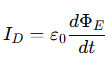
Ans: Displacement current was introduced by Maxwell to account for the changing electric fields in regions like the space between capacitor plates. It is necessary to ensure continuity of current in the presence of time-varying electric fields.
The displacement current is given by:
11. Why is electrical energy transmitted at high voltage from a distance power generating station?An AC source of emf E = 200sin(100πt) is connected across an inductor with resistance R=100 Ω and self-inductance 2H. Calculate:
Ans: Electrical energy is transmitted at high voltage and low current to minimize energy loss in transmission lines. Power loss P = I2R, so by reducing the current, the loss is significantly minimized.
(i) Frequency of AC.
Ans: ω = 100π
f = 100π/2π
= 50 Hz
(ii) Total impedance of the circuit.
Ans: XL= ωL = 200π ≈ 628.3Ω

(iii) Peak value of current flowing through the circuit.
Ans: I0 = 200/636.3 ≈ 0.3145 A
12. State the working principle of a transformer. What is hysteresis loss in a transformer?
Ans:Working Principle: A transformer works on the principle of mutual induction, where a changing current in the primary coil induces a current in the secondary coil.
Hysteresis Loss: This is the energy loss in the transformer core due to the lag between the magnetization and demagnetization of the core material, represented by the area of the hysteresis loop.
13. Write briefly about the need for displacement current.
Ans: Displacement current is needed to account for the changing electric field in non-conductive regions, such as the gap between capacitor plates. It ensures the continuity of current in the circuit and modifies Ampere’s law to include time-varying electric fields.
14. Find the peak current in the circuit given below.

Ans: From the circuit diagram provided, it is a series LCR circuit with:
Inductance L=200 mH=0.2 H
Capacitance C=1 mF=10−3 F
Resistance R=100 Ω
The applied AC voltage is E=50sin(100t) V
We are asked to find the peak current in the circuit.
The voltage source is given by E = 50sin(100t)
From this, we can see that the angular frequency ω is:
ω =100rad/s
For a series LCR circuit, the total impedance Z is given by:

Where:
XL= ωL (Inductive Reactance)
XC = 1/ωC (Capacitive Reactance)
Now, calculate XL and XC :
XL= ωL=100 × 0.2 = 20 Ω
XC = 1/ ωC = 1/100 ×10−3 = 10Ω
Thus, the impedance Z is:

The peak current I0 is given by:
I0 = V0/Z
Where:
V0 = 50 V (peak voltage)
Z=100.5 Ω (impedance)
Substitute the values:
I0 = 50/100.5 ≈ 0.497A
The peak current in the circuit is approximately:
I0 ≈ 0.497 A.

Hi, I’m Dev Kirtonia, Founder & CEO of Dev Library. A website that provides all SCERT, NCERT 3 to 12, and BA, B.com, B.Sc, and Computer Science with Post Graduate Notes & Suggestions, Novel, eBooks, Biography, Quotes, Study Materials, and more.
Subject Ka Complete Video Solution Dekhein
Step-by-step easy concept explanation aur full questions Answer ke liye watch karein ya app download karein:


 Buy Now