
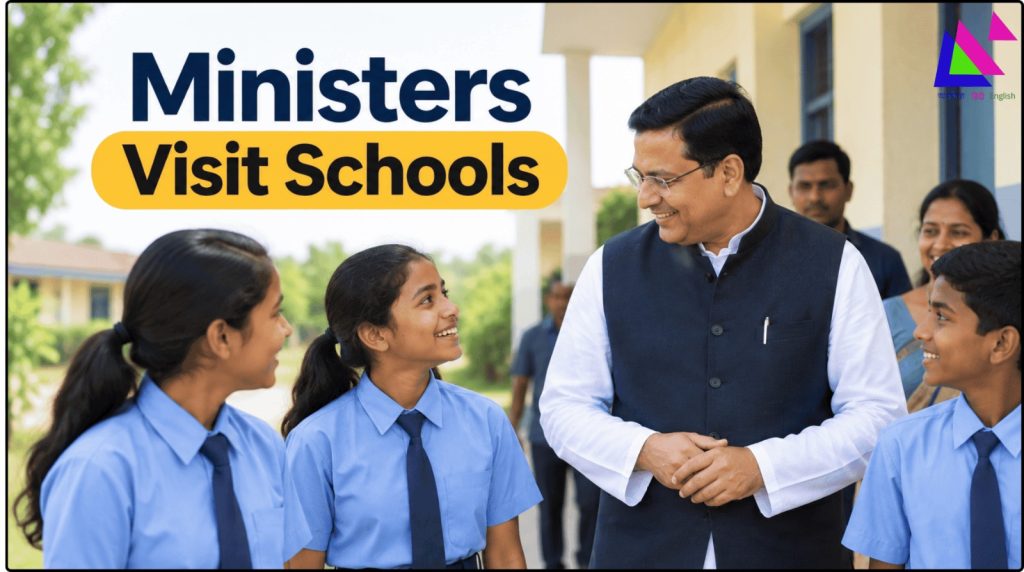
Ministers Visit Schools and universities as part of a reported outreach effort aimed at bringing decision-makers closer to students and educational institutions. Ministers have reportedly been encouraged to spend time on university campuses, interact with students and visit government schools to review facilities and learning conditions. The visits may also focus on school infrastructure and the implementation of the PM POSHAN meal programme.
Instead of depending only on official reports, these visits can provide a direct view of how students and teachers experience the education system.
Why Are Ministers Visiting Educational Institutions?
The reported initiative focuses on direct engagement with students. University visits can give students an opportunity to share their views on education, skills, career preparation and campus facilities. At government schools, ministers can observe how educational programmes and facilities function at the ground level.
The outreach may focus on:
- Direct interaction with students.
- Review of school and campus facilities.
- Understanding students’ learning experiences.
- Identifying areas that may need improvement.
Ministers Visit Schools to gain a first-hand understanding of the conditions that students experience every day.
Focus on Government School Facilities
School infrastructure plays an important role in creating a better learning environment. During these visits, ministers may review whether students have access to essential facilities and resources.
Some of the key areas may include:
- Classrooms: Condition and availability of learning spaces.
- Drinking Water: Access to safe water facilities.
- Sanitation: Availability and maintenance of basic facilities.
- Libraries: Access to books and learning materials.
- Digital Resources: Technology and digital learning facilities.
- School Environment: Overall conditions that support students and teachers.
A direct visit can help officials understand how these facilities work in daily school life.
PM POSHAN and Mid-Day Meals
Another important area of the visit may involve the PM POSHAN programme. Eligible students receive hot cooked meals during school working days under the scheme.
During school visits, ministers may observe:
- Meal preparation arrangements.
- Distribution of meals to students.
- Kitchen and related facilities.
- Overall implementation at the school level.
The review can help provide a clearer understanding of how the programme operates in different schools.
Why Student Interaction Matters
Students experience the education system directly, so their views can provide useful insights. They may share their experiences about teaching, academic resources, technology, campus facilities and career opportunities.
During university interactions, discussions may focus on:
- Student expectations from higher education.
- Academic and campus facilities.
- Skill development opportunities.
- Career preparation.
- Areas where student support can improve.
Ministers Visit Schools and universities to encourage these direct conversations and understand the experiences of students beyond written reports.
A Ground-Level Approach to Education
Official reports and data play an important role in managing educational institutions. However, on-site visits can provide an additional perspective. Teachers and students may share practical experiences that help decision-makers understand how facilities and programmes work in everyday situations.
For example, a school may have a particular facility, but students and teachers can explain whether it meets their daily requirements. Similarly, university students can share their views on academic resources and campus life.
What Could These Visits Achieve?
The initiative may bring greater attention to several important areas of education, including:
- Better understanding of student experiences.
- Greater focus on school infrastructure.
- Direct feedback from teachers and students.
- Review of learning and digital resources.
- Closer observation of PM POSHAN implementation.
Ministers Visit Schools not only to review facilities but also to understand the overall learning environment and interact directly with students.
Conclusion
The reported initiative highlights the importance of direct engagement with students and educational institutions. By visiting campuses and government schools, ministers can gain a first-hand understanding of learning environments, infrastructure and student experiences.
Ministers Visit Schools and universities as part of an approach that can connect educational planning more closely with the everyday experiences of students and teachers. The effectiveness of these visits will depend on how authorities use the feedback and observations to support future improvements in education.
FAQs
1. Why are ministers visiting schools and universities?
Ans: The visits aim to encourage direct interaction with students and review educational facilities.
2. What may ministers review during school visits?
Ans: They may review infrastructure, learning resources, the school environment and PM POSHAN implementation.
3. Will ministers interact with university students?
Ans: Yes, the reported outreach includes spending time at universities and interacting directly with students.
4. What is PM POSHAN?
Ans: It is a school meal programme that provides eligible students with hot cooked meals on school working days.
5. How can these visits help improve education?
Ans: Direct visits can help ministers understand the actual challenges faced by students and teachers and identify areas where improvements may be needed.

Hi, I’m Dev Kirtonia, Founder & CEO of Dev Library. A website that provides all SCERT, NCERT 3 to 12, and BA, B.com, B.Sc, and Computer Science with Post Graduate Notes & Suggestions, Novel, eBooks, Biography, Quotes, Study Materials, and more.






 Buy Now